








Once again this year, the Austrian town of Linz, with its Ars Electronica Festival, is transforming into a meeting place for artists, researchers, technologists and the public from all over the world. This edition, entitled “NEGOTIATING HUMANITY”, poses a question that seems increasingly urgent: what does it mean to be human in a world redefined by artificial intelligence, the ecological crisis and political uncertainty?

Rather than seeking simple answers, Ars Electronica 2026 focuses on the process of negotiation itself. As technologies become capable not only of performing tasks, but also of generating, proposing and acting autonomously, the boundaries between human action and that of machines are becoming increasingly difficult to define. At the same time, climate change and geopolitical tensions are prompting societies to rethink the concepts of responsibility, cooperation and collective action.
Art becomes a space in which these tensions can be explored to find solutions, above all by raising questions. Through exhibitions, performances, conferences, workshops and experimental projects, the festival invites visitors to engage with different perspectives and to challenge preconceptions about technology, progress and the future.

For the 2026 edition, Ars Electronica is moving to the heart of Linz. The festival takes place across three main hubs — OK QUARTER, DANUBE TRIANGLE and MED CAMPUS — as well as numerous additional venues throughout the city. Museums, universities, public spaces and cultural institutions become part of a decentralised festival landscape, transforming Linz itself into a platform for discussion and experimentation.
Among the highlights is the thematic exhibition at the Lentos Kunstmuseum, which presents a selection of award-winning projects from the Prix Ars Electronica and the European Commission’s S+T+ARTS Prize. The exhibition at the Ars Electronica Campus brings together projects from 45 universities around the world, offering an insight into how a new generation of artists and designers is responding to contemporary technological and social challenges.
The 2026 edition also marks the 30th anniversary of the Ars Electronica Centre, which opened in 1996. New exhibitions, performances and presentations at Deep Space 8K link this anniversary to issues relating to artificial intelligence, cultural heritage and possible futures.
Since its inception in 1979, Ars Electronica has explored the ever-evolving relationship between art, technology and society. In 2026, this relationship becomes a negotiation: it is not simply a question of what technology is capable of, but of what kind of future — and what conception of humanity — we wish to build.
Ars Electronica 2026, Linz Austria, 09 – 13.09.2026
Please visit the website for tickets and for the updated calendar of events.
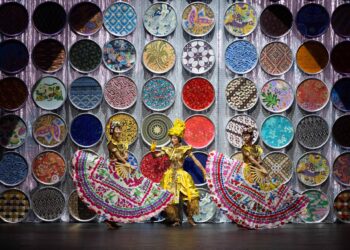
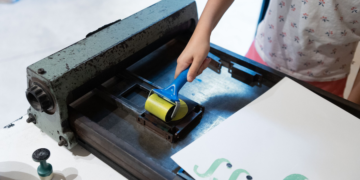
images: (cover 1) Ars Electronica, Linz, 2026 (2) Jajack Movement (KR), «Samsara of Blossom- Resonance», ph:Philipp Greindl (3) Hoonida Kim (KR), « Fine-Tuning Human Sense 2.1», ph: Tom Mesic (4) unitree robotics, RobodogG02, 20025