



Une intervention des artistes peut-elle poétiser et humaniser la science et la technologie? L’art peut-il s’étendre et s’enrichir grâce aux commentaires “imaginaires” des techniques nouvelles par les artistes, ou grâce à l’usage que ceux-ci en font? Enfin le public peut-il, veut-il assumer une participation active dans le processus de la création, qui est étroitement lié, rappelons-le, aux changements que connaissent la culture, l’art, la science, la technologie et par conséquent la société elle-même?
(Frank Popper, Introduction, in Electra. L’électricité et l’électronique dans l’art au XX° siècle, catalogo della mostra, Paris 1983-1984)
“A work of art is by its very nature ‘interactive’ in that it always involves a relationship established between the artist, the work and the viewer; the work is always a relationship and creates relationships’”. This is what I wrote in a booklet of university lecture notes from the 1990s devoted to the ways in which artists were experimenting with new electronic and digital technologies; I was referring, in particular, to the analysis of interactive art installations, which were becoming a fundamental aesthetic paradigm. Inspired by the potential of video and computers, artists were developing a trend that sought to transform the viewer from a passive observer into an active participant involved in creating, completing or modifying the work. The viewer must be a ‘co-author’, it was said, in reference to a new dialogue between man and machine, around which inventions, definitions, symbolic elements and processes were proliferating at the time. Artists fuelled the imagination – their own and that of the participating public – through trials, appropriations, hacking and experimentation with signals, pixels, sensors and the relationship with the medium, at a time when information technology was not yet as pervasive as it is today.
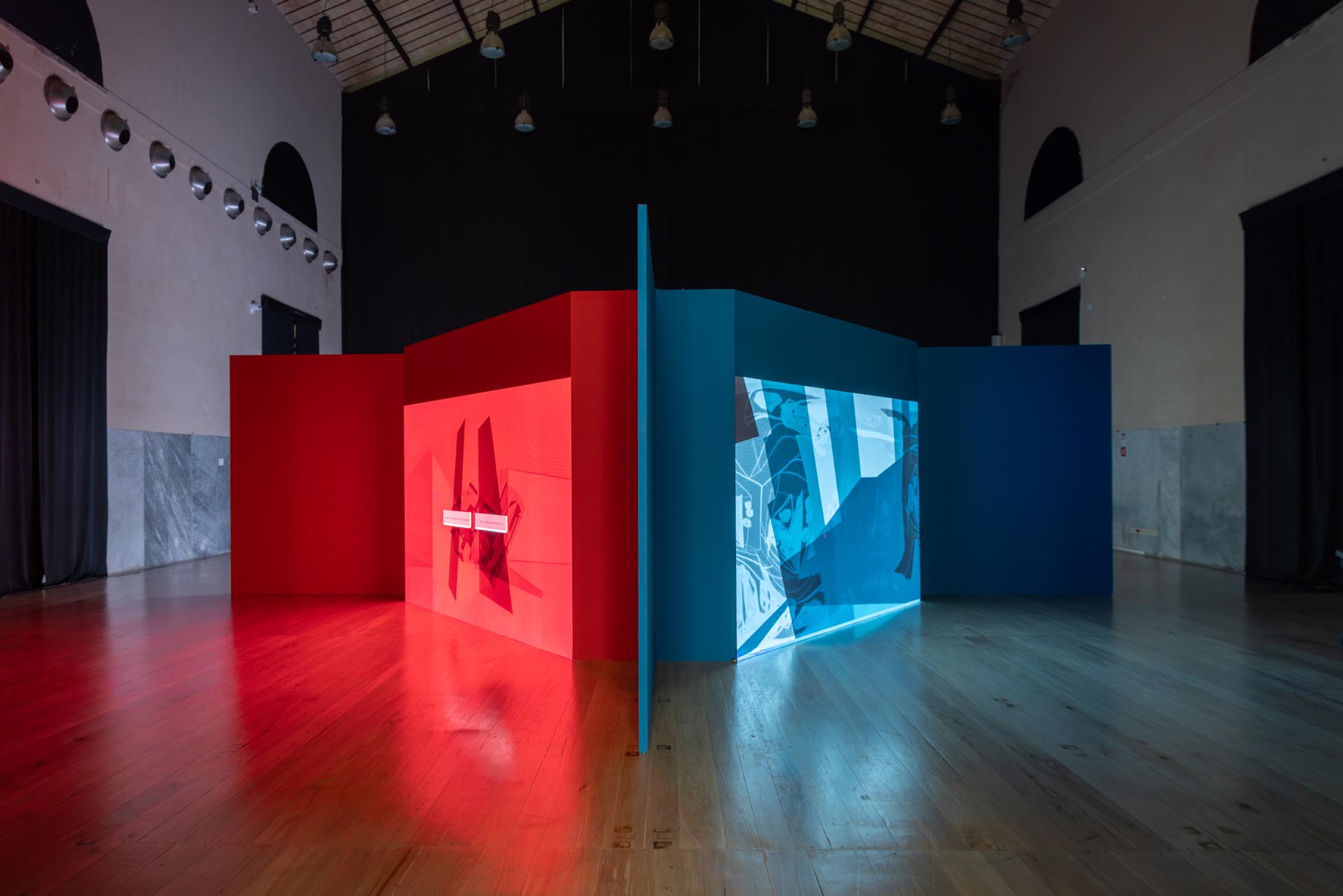
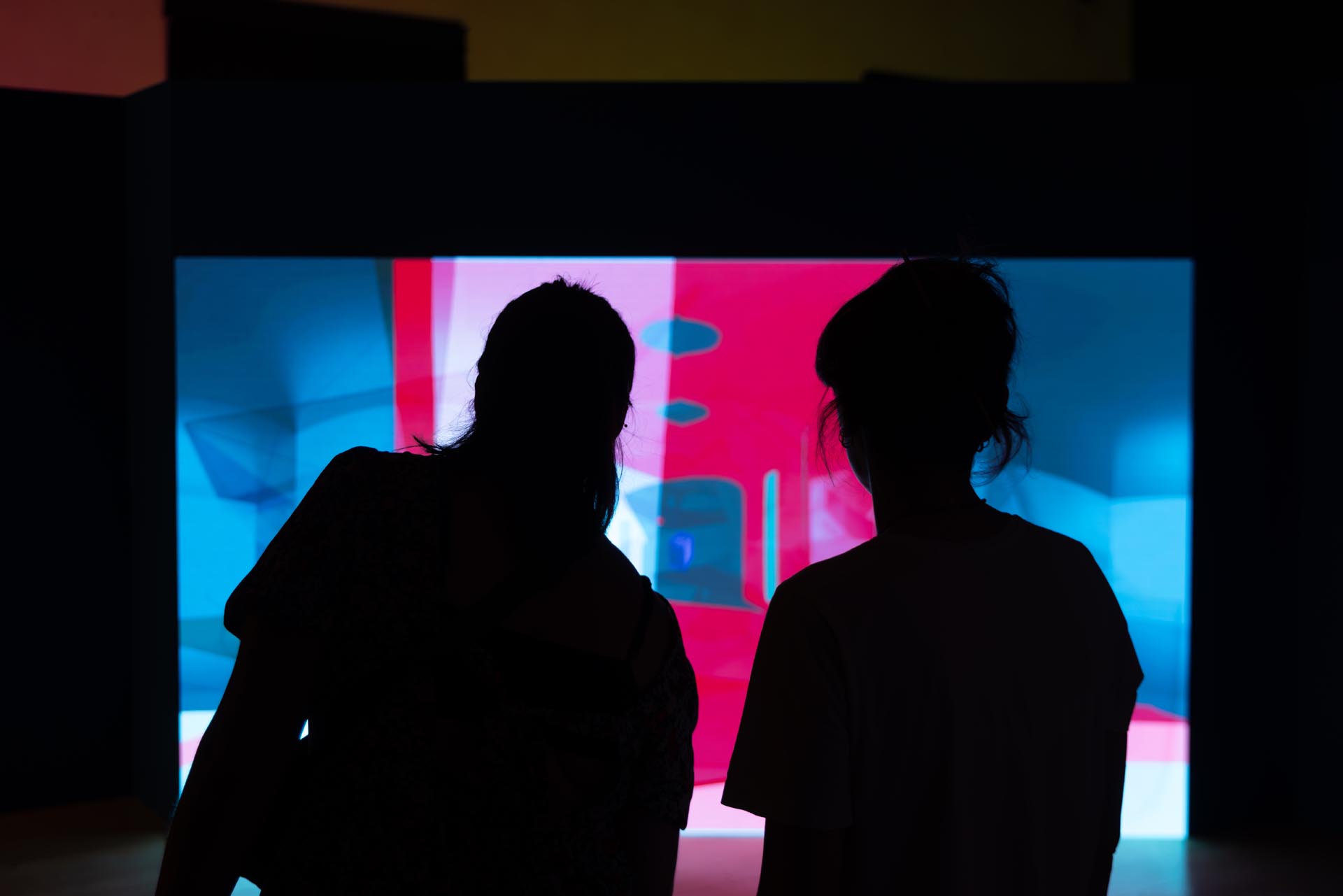
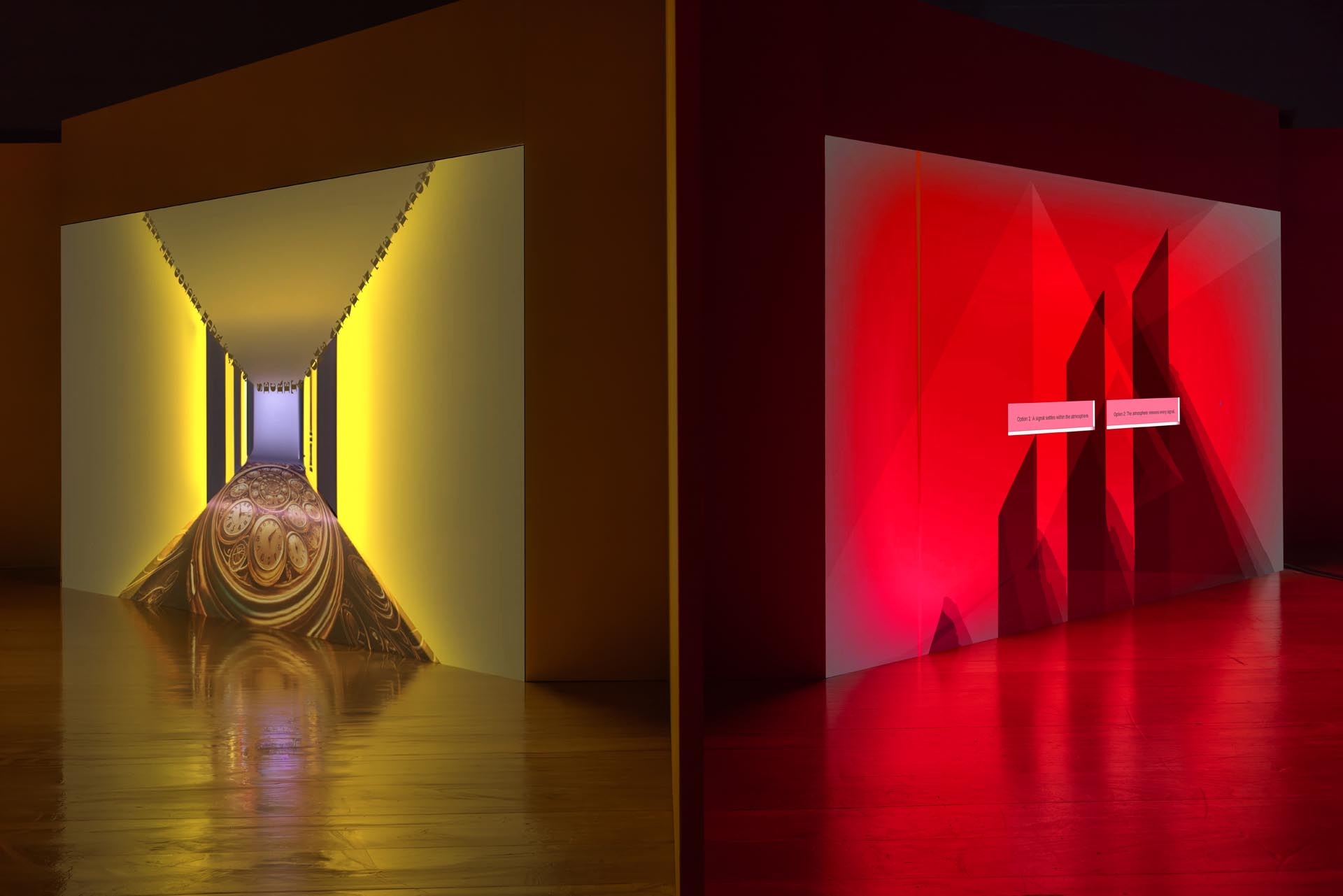
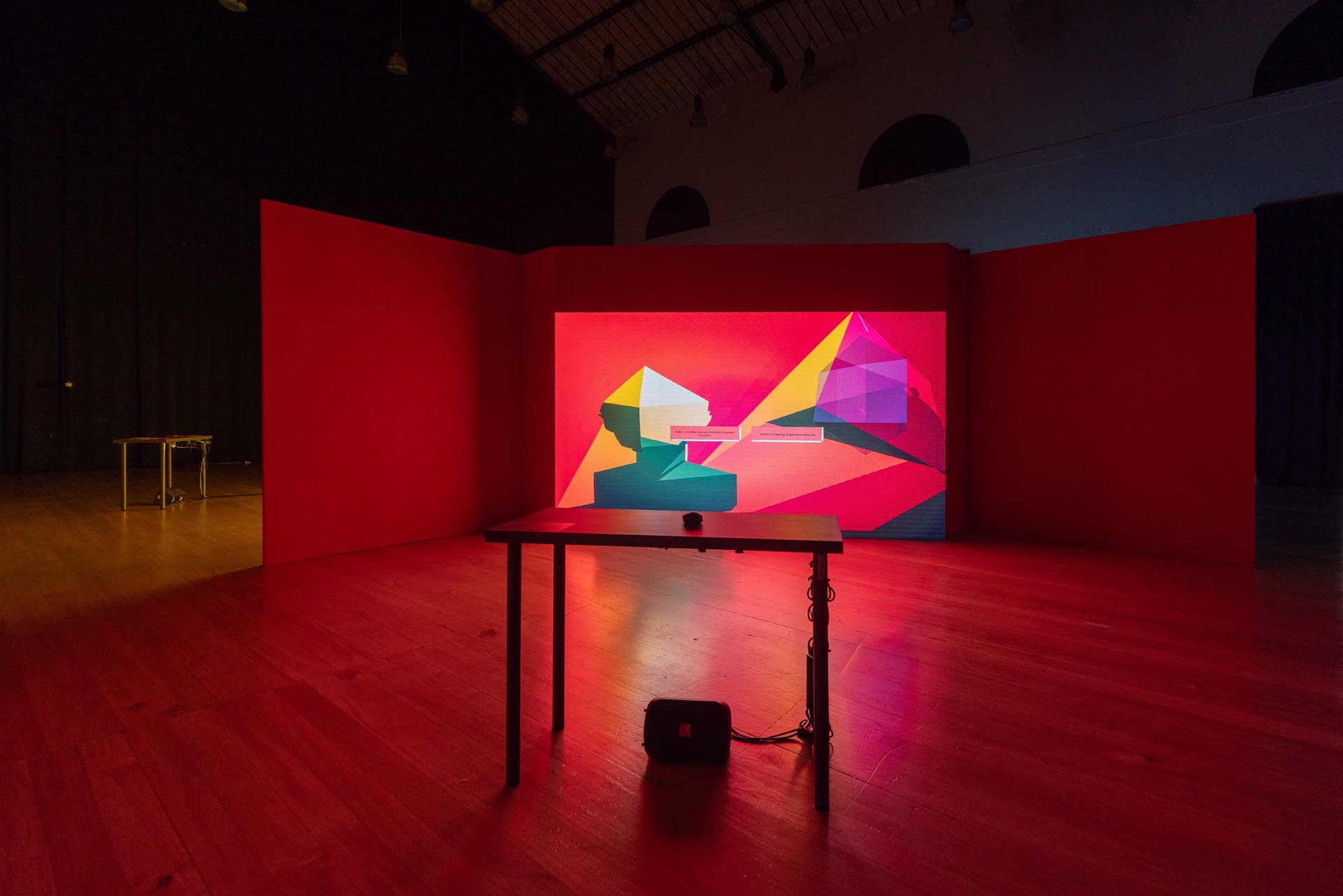
Today, the idea of interactivity must be conceived within a completely different framework, and my reference serves as an ‘archaeological’ starting point in relation to the changes in concepts, processes, intentions and expectations brought about by emerging technologies. There are various types of interactivity that articulate the user’s action (gesture, movement, path, touch) and the work’s response—which is modified according to the system of sensors, software and algorithms—in different ways. Chiara Passa’s work in the exhibition The Abstract Films: Sculpting Narratives in Space, at the Mattatoio in Rome, curated by Paola Lagonigro and Laura Leuzzi, offers a lucid exploration of these themes. This is an exhibition of considerable significance in the career of an artist who can be regarded as an Italian pioneer of media art, active since the late 1990s and engaged with the relationship between architecture and virtual reality. The exhibition presents four distinct modes of interaction – Yellow Film, Black & White Film, Blue Film, Red Film – determined by the audience’s choices and by artificial intelligence systems, staging a visually striking short-circuit: the encounter between the industrial archaeology of the Mattatoio and the fluidity of contemporary algorithmic abstraction. The exhibition’s title evokes cinema, but Chiara Passa subverts the logic of sequentiality and traditional narrative to propose an experience of visual and spatial traversal rather than a story; just as the industrial and monumental spaces of Teatro 2 at La Pelanda cease to be mere containers and become an integral part of the work.
As the curators summarise in the press release:
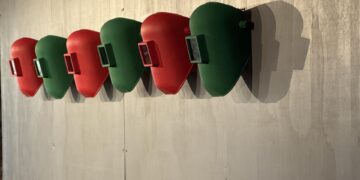
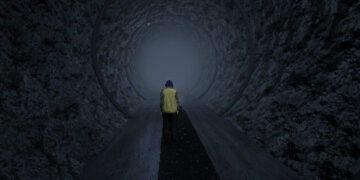
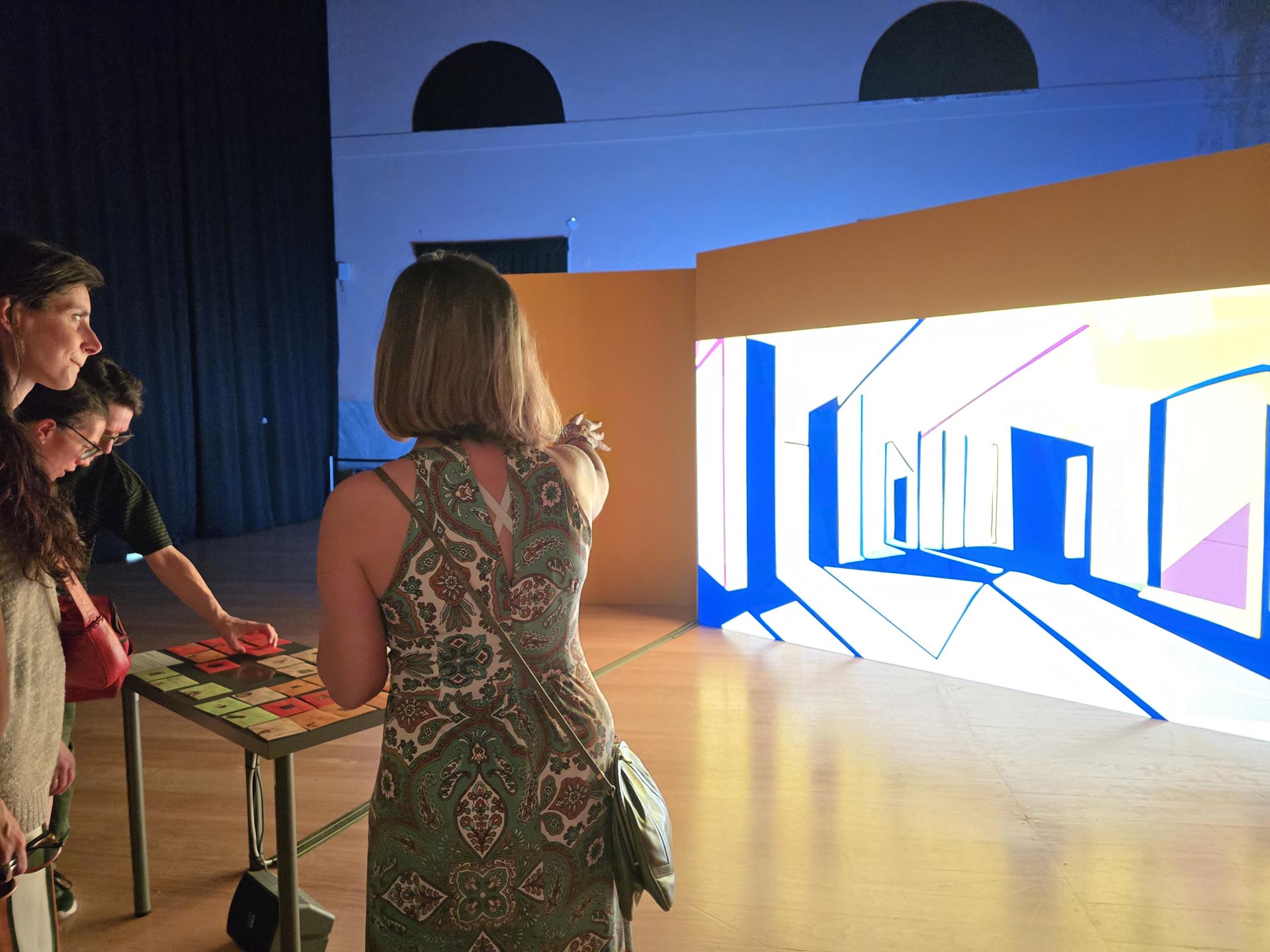
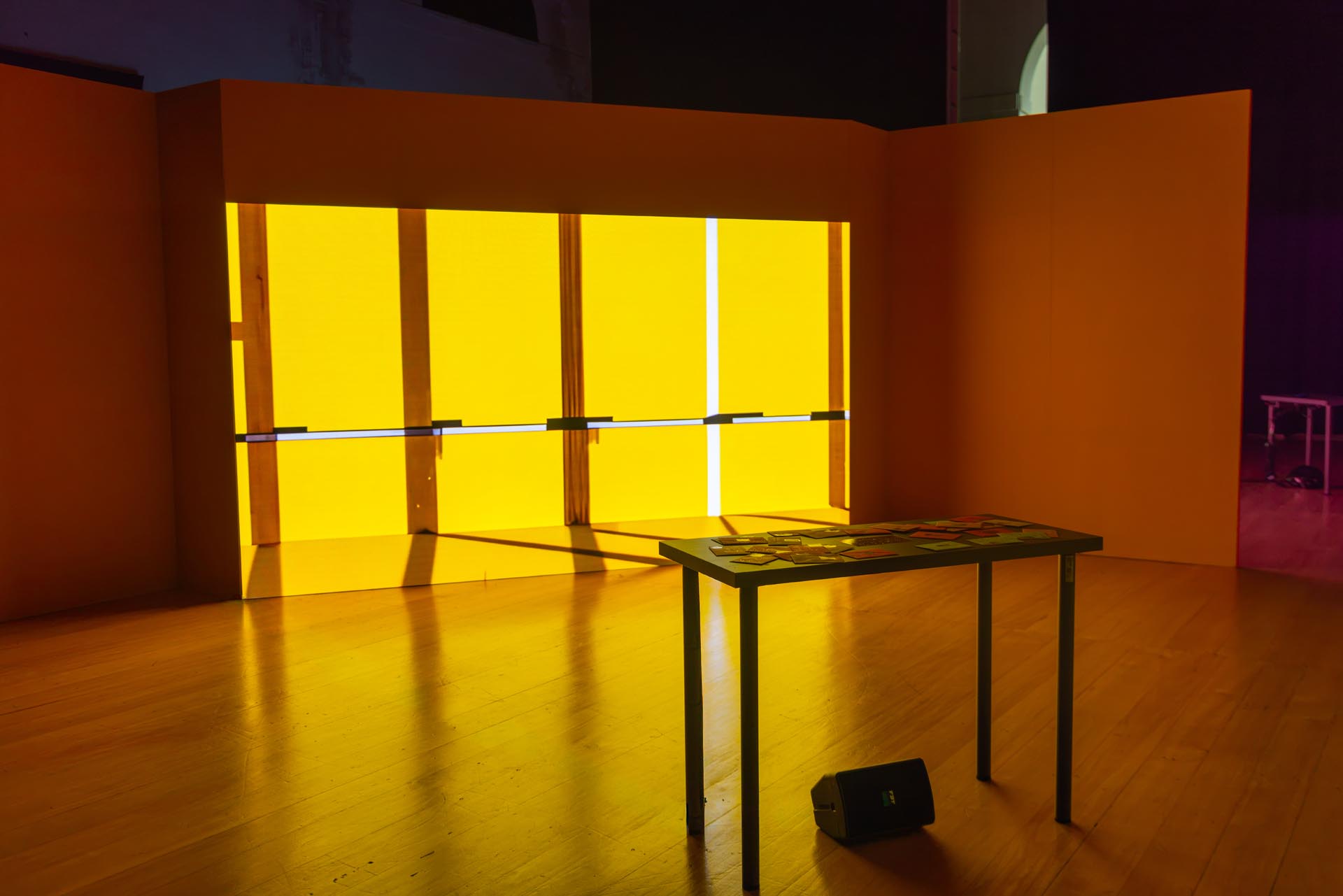
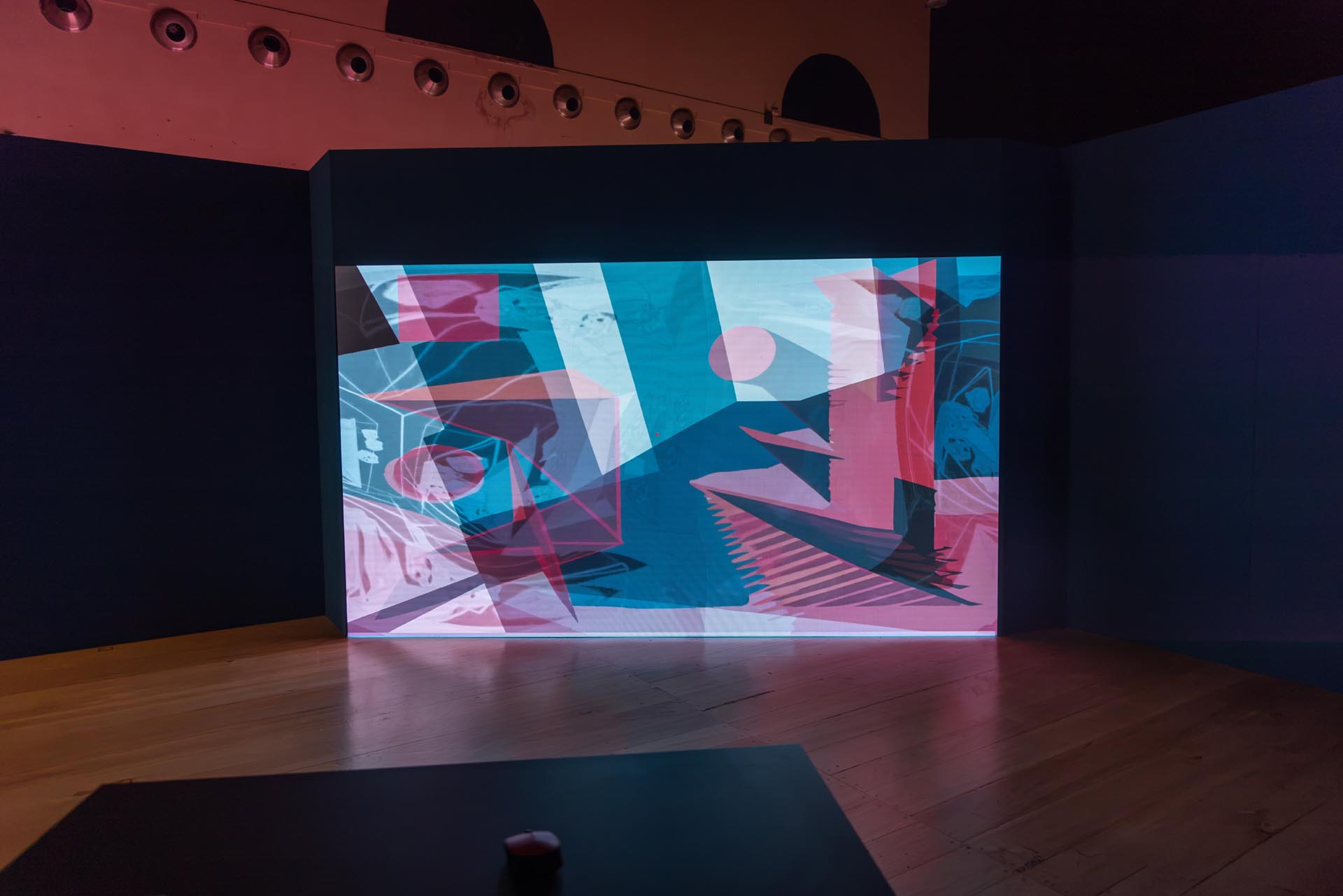
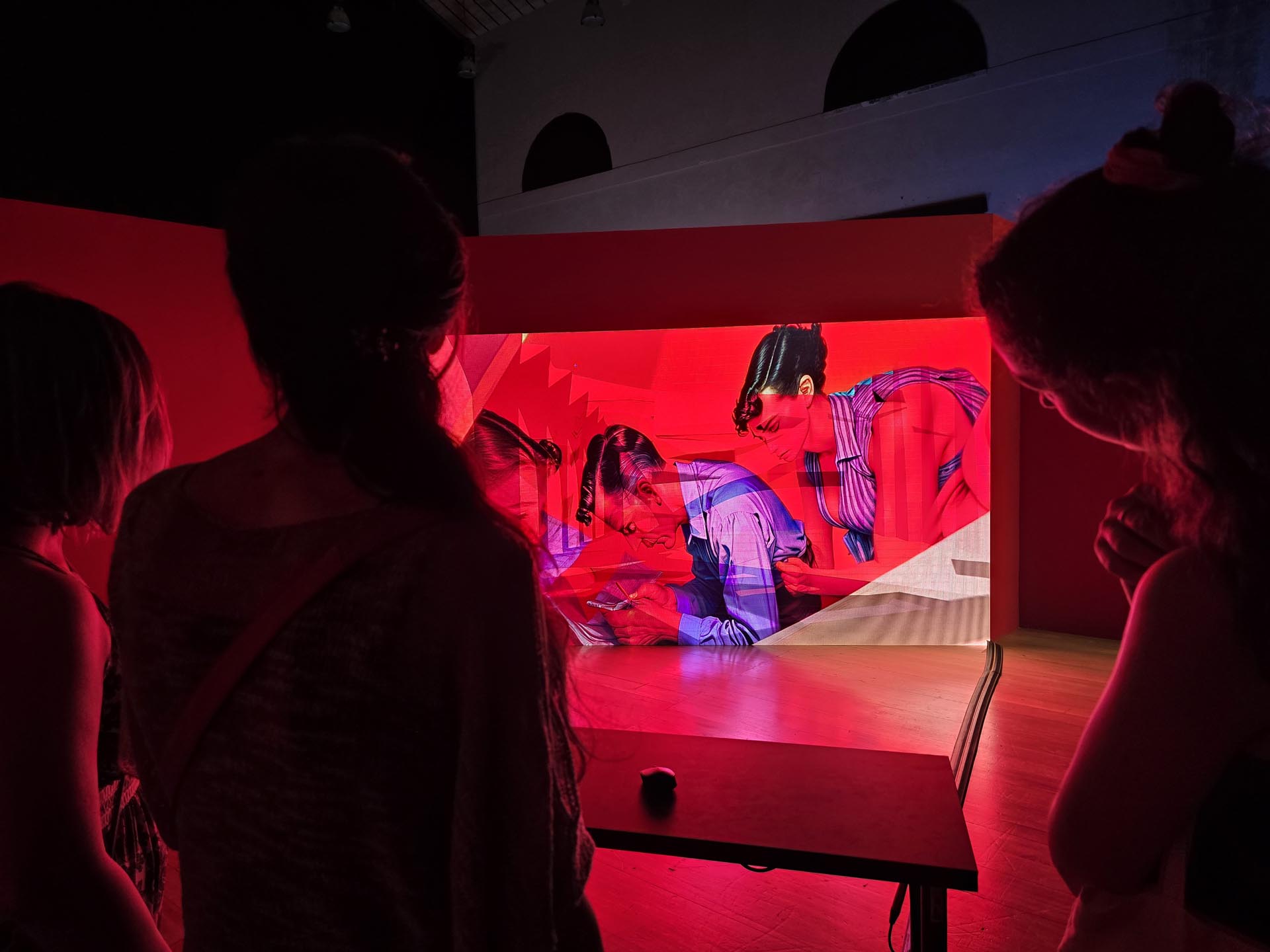
Each of the four films presents a different mode of interaction for the audience: Yellow Film offers a narrative remix through thirty interactive envelopes set to the rhythm of a suspenseful electronic soundtrack. Black & White Film allows for narrative manipulation through thirty sculptural objects and sequences set to the rhythm of a techno-minimalist soundscape. Blue Film enables interaction via an AI prompt and remixed sound effects that guide a dynamic, ever-changing experience. Red Film features an AI prompt alongside sonic and chromatic interactions that continually redirect the narrative flow. The Abstract Films form an immersive and participatory ecosystem in which architecture expands, reflects and dissolves into digital abstractions. The audience becomes part of a new emotional cartography, where urban memory, industrial archaeology and digital systems coexist in the same space.
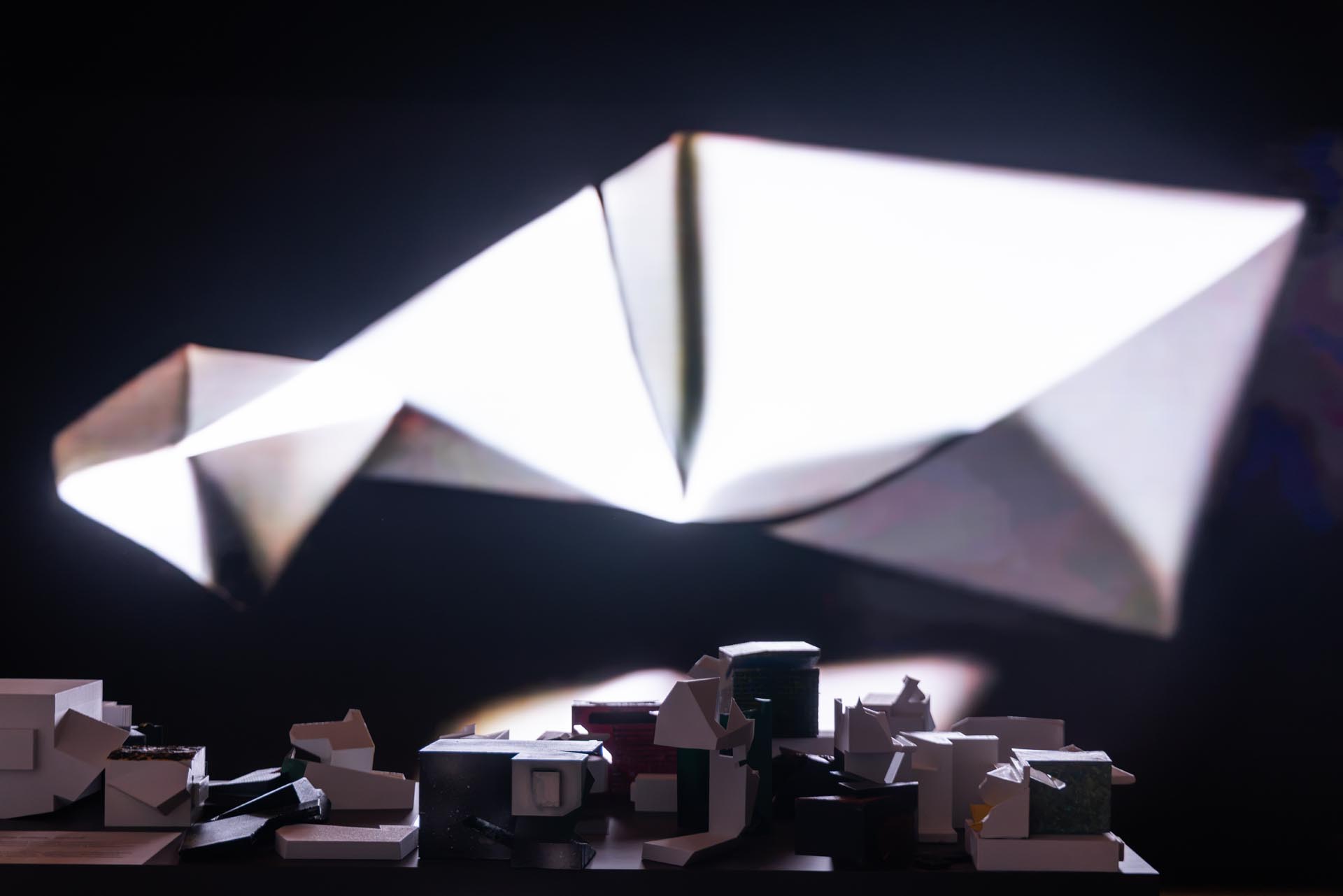
Thus, the modes of interaction in the four films range from tactile sculptural objects to prompts and sound remixes; the viewers’ actions continually redefine the flow of the work, and the algorithm is not merely an image generator but a reactive device in the service of abstraction. The audience takes part in a genuine performance that unfolds through a live action carried out jointly by the artist, the audience and the computer systems characteristic of artificial intelligence: the work exists within this relational dimension in which certain behaviours and gestures alter the distance between the creator and the product, and between human and machine. In this process, Chiara Passa utilises not only the immaterial nature of algorithms but also concrete and tactile elements such as the spectators’ bodily experience, as well as paper envelopes and small sculptures, configured as geometric solids according to the instructions the artist provided to the AI. In short, these works clearly feature the physicality of the object, as if to suggest that matter, the body and gesture continue to play a central role alongside the immaterial infrastructure provided by programmes and calculations. The paper envelopes, in particular, evoke a form of postal communication that is now outside the realm of everyday experience and may perhaps be read as an allusion to a sense of time and modes of exchange that have now fallen into disuse, yet which take on a certain charm within an algorithmic performance, not least through contrast: almost a further reference to the relationship between emerging technologies and the industrial archaeology of the Mattatoio.
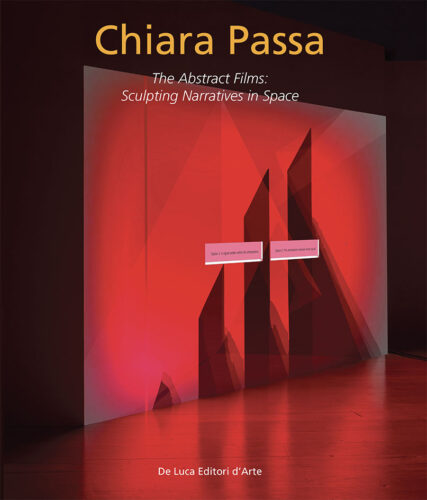
In the catalogue, Paola Lagonigro, Laura Leuzzi and Darko Fritz examine Chiara Passa’s artistic work with great critical attention and from various perspectives, analysing her creative development from the 1990s onwards, her cultural roots, her technical expertise and the philosophical dimensions of her artistic language. Artificial intelligence is regarded as a cornerstone of this work; it is the structural component that participates in the performance by interacting with, and causing objects, sounds and spectators to interact with one another — not only those who act directly, but also those who appear merely to be watching, yet who in reality participate through their presence in space and time.
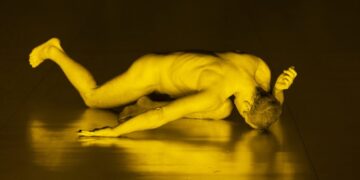
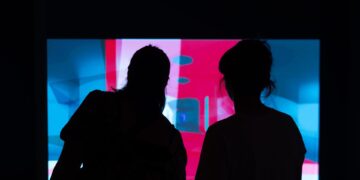
The exhibition therefore offers visitors an intriguing experience on both a physical and conceptual level, as well as being playful and interactive; it charts a course and, above all, tests the relational potential that the union of art and computing can bring about. Traces and accounts of this remain in the texts and also in the images of the catalogue: photographs of the screens, the tables with objects, and the backstage scenes. To these images one might add the photos taken at the opening and posted on social media, which show the crowding together and the gestures of various people and convey a sense of that direct connection between man and machine, between spectators and devices, which seems to me to be the ultimate meaning of the exhibition and the catalogue.
The relationship, therefore, is the fundamental core of these works, but an extremely complex one that ultimately leads back to ‘a computational ecology in which philosophy, software, architecture and artificial intelligence converge in a form of interactive generative poetry’, as Passa writes in his seminal essay Training the Machine: From Code to Generative Narrative, a text of great clarity that complements the other contributions in the catalogue, whilst also helping to bring into focus the specific critical language through which this technological art is interpreted today. For in the writings on The Abstract Films: Sculpting Narratives in Space, various terms referring to new, emerging and dominant technologies are introduced into the canonical terminology of art criticism; not only the now well-established terms such as video, installation, digital, interactive and virtual, but also terms such as augmented reality, computational logic, prompting, bias, black box, models and algorithms. A language rife with technical terms that even I cannot avoid using whilst writing these notes; reflecting on this exhibition has been, for me, a kind of challenge to understand what is defined as the technological culture of artificial intelligence – that is, an inextricable web of skills, visions, expectations and components which today have revolutionised the historical roots of the art/technology (or art/machine) relationship and have taken on a defining presence inextricably linked to changes in the way we see, feel, hear, think and express ourselves.
The complexity of this exhibition, even on a theoretical level, has therefore taught me something more about the dynamics of our restless and problematic present; I interpreted the message of Chiara Passa’s films as an indirect yet sensitive re-proposal not only – and not so much – of the interactive relationship between the artwork, the artist and the viewer, but of the deeper relationship between art and digital technologies, in their various forms. All this brought to mind a line of thought that had fascinated me between the late 1980s and early 1990s, namely the idea of ‘humanising technology’ through art, as Frank Popper wrote in his 1983 essay, which I quoted in the epigraph to these notes. For Frank Popper, the artist is the one who transforms the machine from a cold instrument into a means of participation and critical awareness; his arguments aimed to liberate digital devices and codes from their purely utilitarian, industrial or control-oriented purposes, in order to restore them to the realm of sensibility, the imagination, the body and social relations.
An idea – or rather, a question – that was present in the statements and intentions of many artists (for example, Wolf Vostell, Nam June Paik, Fabrizio Plessi and Bill Viola) and which was subsequently reabsorbed into the relentless logic of the system as the whim of an impracticable utopia. But I find myself wondering whether the very pervasiveness of artificial intelligence — within a far broader horizon than the artistic field — might not prompt us to revisit this age-old question of the humanisation of technology through art in more specific and problematic terms. For it should be noted that, as I have mentioned, AI is considered a cornerstone of this work by Chiara Passa, yet the accompanying texts and images steer clear of the ongoing ideological, ethical and political debate surrounding artificial intelligence itself. Even in Passa’s text, Training the Machine: From Code to Generative Narrative, a sophisticated and formally brilliant training process is demonstrated, yet it avoids engagement with traditional codes of empathy and feeling, as well as with pressing issues in technological culture such as the methods of training itself, social impact, costs and ideology.
Principles and challenges, costs and aims, biases and models are implicitly and inevitably part of this fascinating exhibition, which highlights, on the one hand, the role of algorithms as tools and interlocutors in artistic creation, and, on the other, the role of humans as variables and sources of input (a gesture, a word, a presence) within a computational flow. But I think we should delve deeper, starting once again from Chiara Passa’s work. Computer language is not a neutral means of expression, nor is art merely a language or an aesthetic and authorial event managed by a closed system decontextualised from the political and social present. In different ways, art and machines, devices and algorithms are both cultural products that embody and reflect society’s desires and contradictions — for better or for worse. And as such, whenever their connections resurface, they must be profoundly and collectively re-examined.
CHIARA PASSA. The Abstract Films: Sculpting Narratives in Space, curated by Paola Lagonigro and Laura Leuzzi, De Luca Editore, Rome, catalogue produced to accompany the eponymous exhibition Rome (Mattatoio, Giune-August 2026)
images (cover 1-2-3-4-5-7-8-9-10): Chiara Passa. The Abstract Films. Sculpting Narratives in Space, exhibition view, Mattatoio di Roma, Rome, photo: Monkeys Video Lab (6) Chiara Passa. The Abstract Films. Sculpting Narratives in Space, De Luca Editore, cover