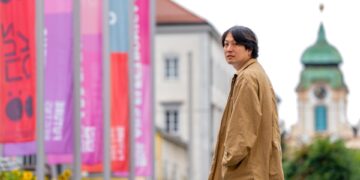



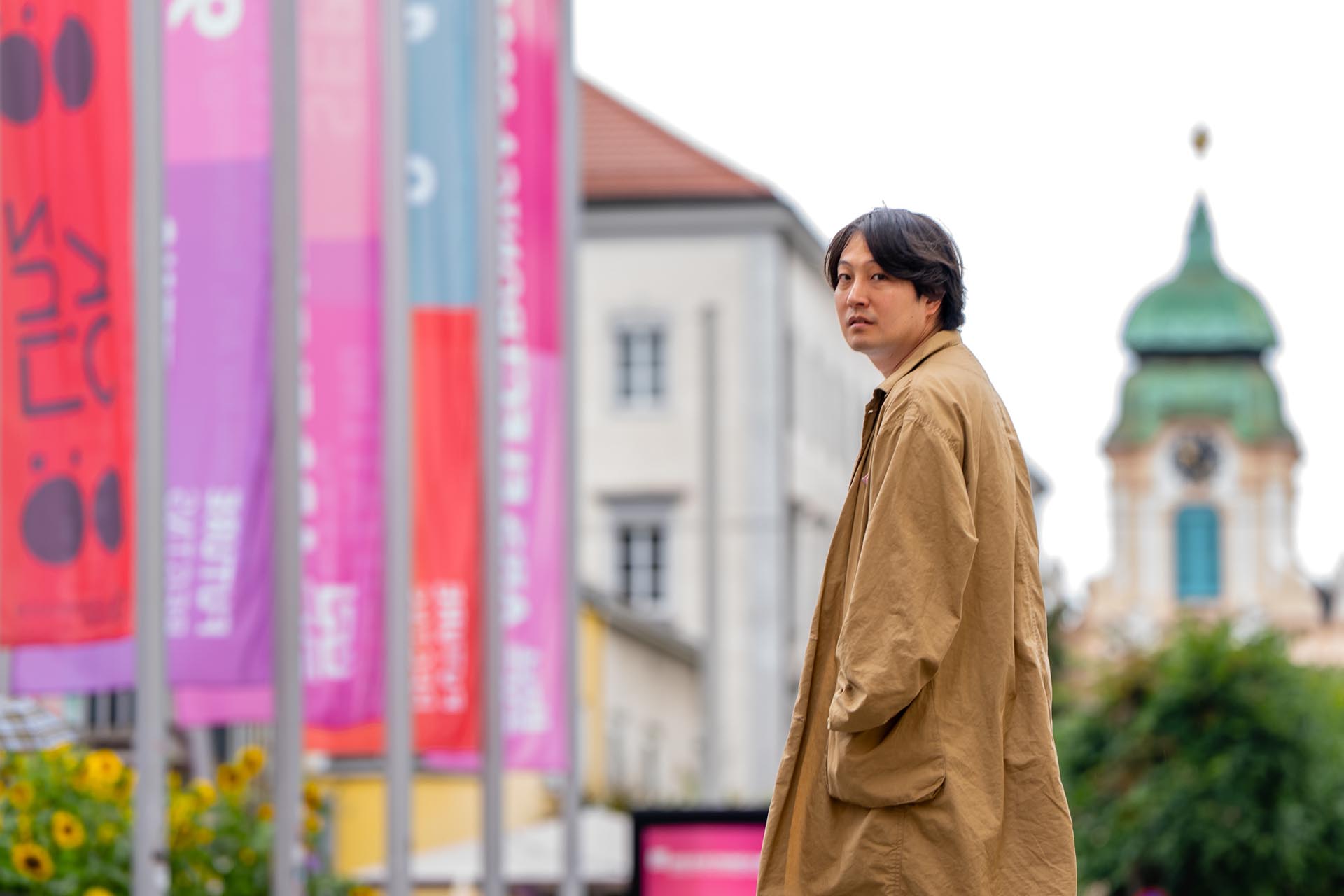
Nozomu Kubota is a relative newcomer to the art world, having trained and worked as an AI engineer and entrepreneur. Through the company he founded at the age of 19, he has secured numerous patents in countries around the world, from the United States to China. For years, he worked on making artificial intelligence more accurate, until his work led him to grapple with certain questions that paved the way for what would become his artistic practice: what does accuracy mean for a machine? And what does it leave behind when compared to humans? His practice has thus focused on outliers – the anomalous data points that are discarded when building artificial intelligence systems. When these outliers coincided with human singularities – albeit in the minority – Kubota turned away from the machine to meet people and interview them. In doing so, he returned these singularities to humanity, turning error into an echo of awareness regarding the diversity of human profiles – including genetic and physiological ones: profiles that the machine recognises only in standardised models and not in the singularities these may exhibit on a physiological and genetic level, even if they represent a minority.
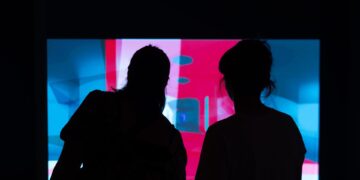
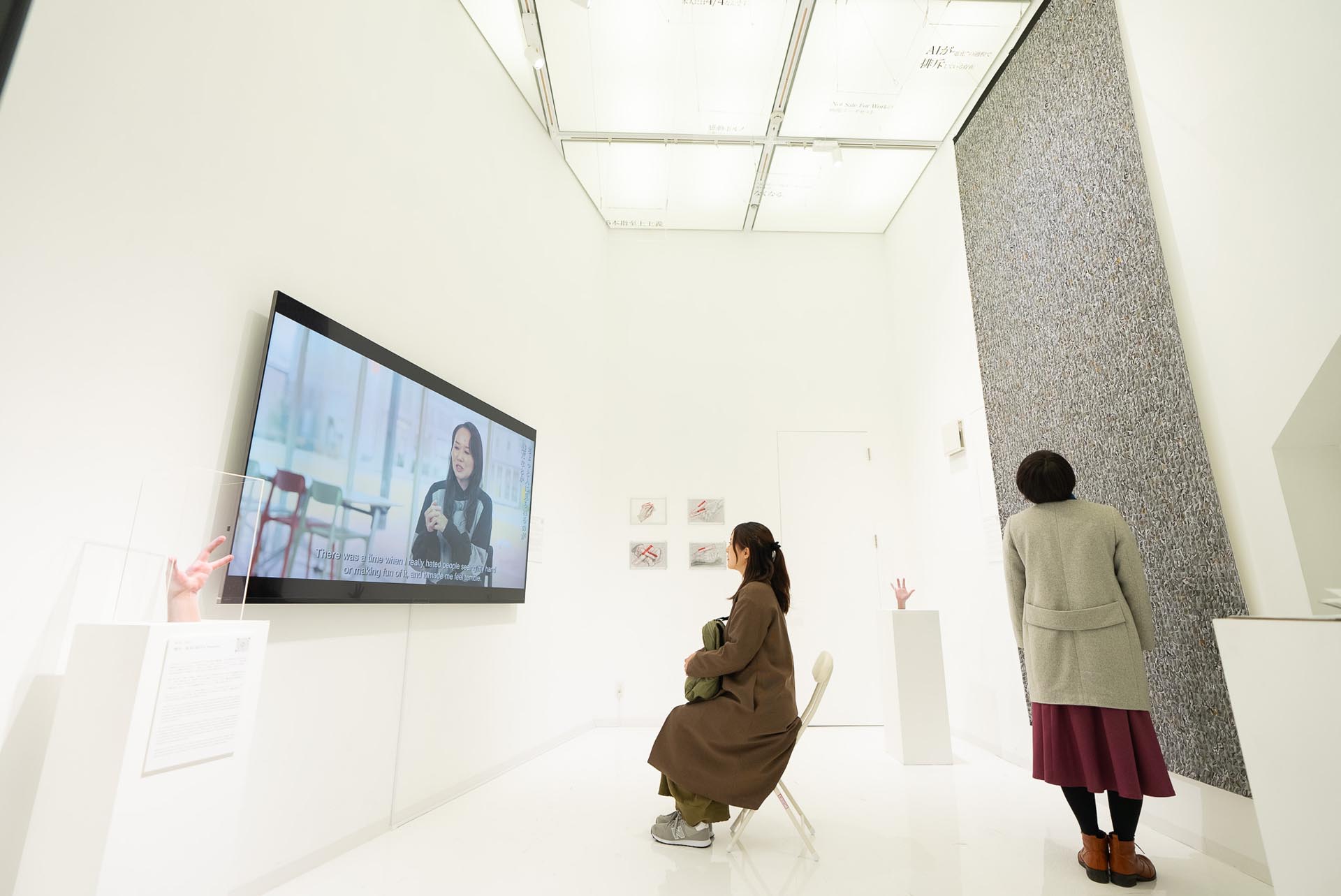
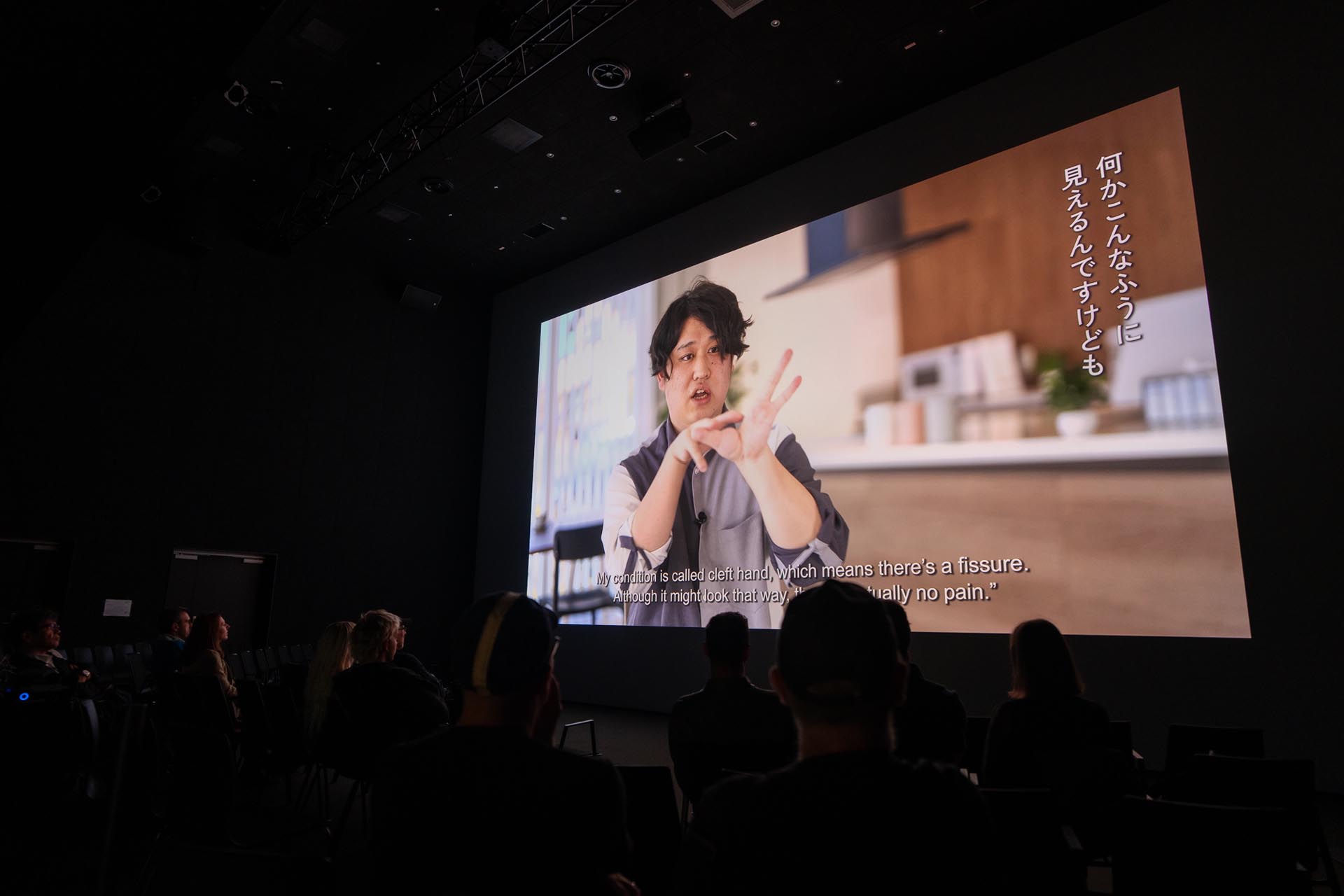
We met him at Ars Electronica, which since 1979 has been one of the most important festivals dedicated to art, technology and society, where his project AI’s Silent Omissions (2025) was presented to the public for the first time and received an Honorary Mention in the Digital Humanity category of the Prix Ars Electronica 2026. For this work, Kubota disabled a security filter and examined images blocked by an NSFW system. He discovered that almost none contained sexual or violent content: rather, the software was rejecting images of hands with fewer than five fingers.
Kubota’s work resonates with the thinking of the philosopher Yuk Hui. Through the concept of cosmotechnics, Hui reminds us that technology is never universal or neutral: every culture has developed its own way of bringing together technology, nature and ethics. In opposition to a single technological rationality that tends to homogenise the planet, Hui calls for technodiversity. It is within this space that Kubota operates, rediscovering the local in what the machine fails to recognise. His work ranges from the ‘incorrect’ hands rejected by algorithms to the dialects of Nishikawa Town, Yamagata Prefecture, which are at risk of disappearing, right through to La Galigo, the Bugis epic that the machine can only misname. Together, these projects attend to forms of knowledge that AI systems struggle to recognise or preserve. We spoke with him about normality and error, about submerged languages and memories, and about how these singularities can be restored to the public and to the collective consciousness.
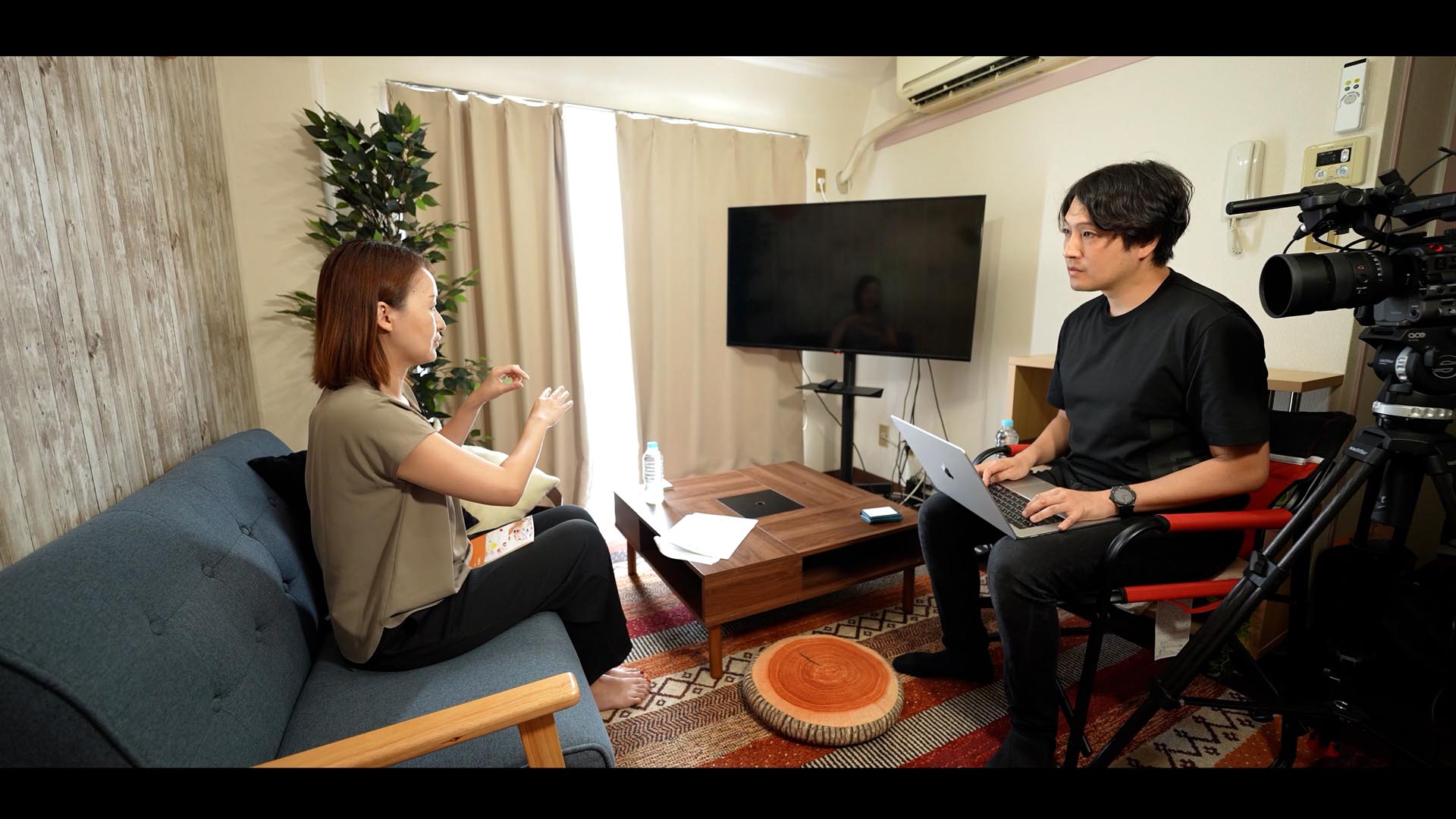 E. G. Rossi: You have a background in engineering, and you founded your firm when you were 19 years old. What was the impulse that moved you towards the arts?
N. Kubota: When I was working with artificial intelligence, my aim was mainly to develop AI and improve its accuracy. But when I started thinking about AI bias, or about things like technofascism, I realized that there might be a big problem inside artificial intelligence. There are a lot of human biases inside AI because artificial intelligence learns from datasets, and datasets come from our general assumptions. Those assumptions contain many ideas and biases, and these become embedded in artificial intelligence. So I thought that developing artificial intelligence was not enough. Asking questions about it is also important for society. I wanted to create better questions for society, and that is why I went to the MFA program at Tokyo University of the Arts.
When we develop artificial intelligence, we delete the outliers first. But inside those outliers there is culture, there are bodies, conversations and memories. Perhaps there is civilization and culture inside them.
So I want to find what kinds of outliers we are removing in this era.
I want to create work that artists and engineers of the future would find compelling—and that artists and engineers of the past would also find compelling, if they could see it.
In terms of technological sophistication alone, no matter how advanced the technology I create today may be, I cannot expect to compete with the artists and engineers of the future. Yet the vivid memories of people living today, and the evidence of the fundamental problems of our time, are disappearing every day. However far technology advances, it may never be able to recover what has been lost.
That is why I want to look closely at—and preserve—the lives and memories we erase in the age of AI. To me, this is like writing a letter to someone a hundred or a thousand years from now. I believe there is value in leaving those letters behind as works of art.
And I think I love humans. I like talking to many different people.
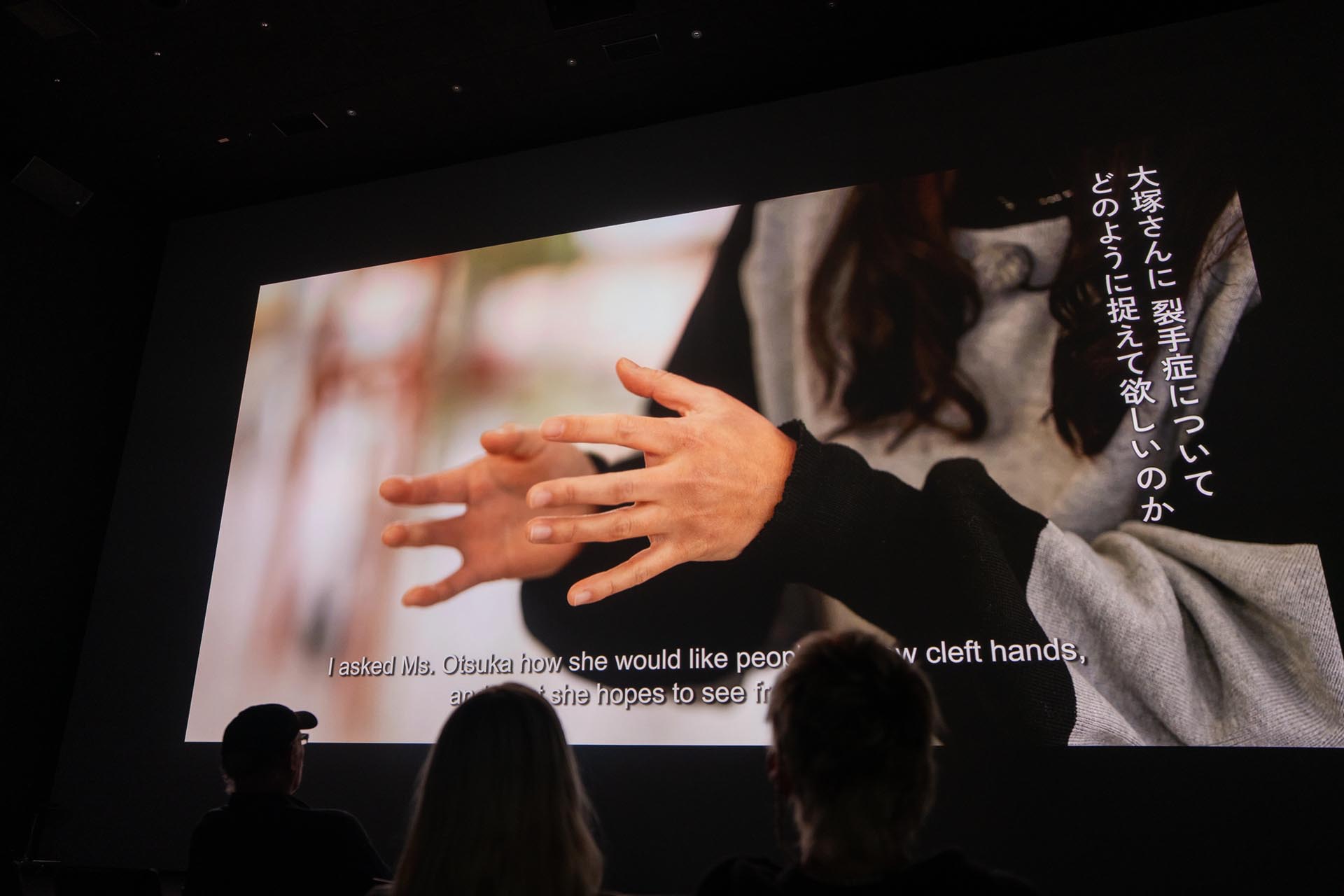
You participated in Ars Electronica with the video work AI’s Silent Omissions (2025), which explores the unnoticed exclusion of bodies and lives that fall outside the dominant norms of AI development and algorithms. This starts with hands that have fewer than five fingers, which AI does not recognise as normal. For this piece, you collected 10,000 AI-generated images that had been flagged and withheld by NSFW filters. How did you gather these images, and what criteria guided your audit?
At first, when I was drawing the hands, I was drawing from images generated by Stable Diffusion. There were many Stable Diffusion images in which the hands did not have five fingers. I started thinking about what this means in the age of artificial intelligence. So I drew the images that artificial intelligence had produced.
After that, I became interested not only in the hand images generated by AI, but also in what happens inside artificial intelligence: in particular, the images rejected by NSFW filters. NSFW means “not safe for work.” AI systems filter and reject certain images. There is a safe mode in artificial intelligence, but from an engineering perspective it is possible to turn off this safe mode. I turned it off, obtained the rejected image files, saved them in my database, and audited them.
Generally, we imagine NSFW images as violent or sexual content. But when I audited the images, there was very little sexual or violent content. In my audit, only one image file appeared to contain sexual content. Another contained a middle finger, so perhaps that could be interpreted as sexual or offensive, but it was not explicitly sexual.
So I started asking: why does the NSFW filter ban these kinds of images?
That became an important question for me. Perhaps our general assumptions determine what is considered normal and abnormal. In that sense, we—the people who construct these systems—are the ones banning these “incorrect” or malformed hands.
With this work, you raise questions about normality. Have you encountered other cases in which AI excludes or misrecognises something unfamiliar?
Yes. I am developing a project in Indonesia with cultural worker Mirwan Andan, centred on La Galigo, a very long poetic story from South Sulawesi.
La Galigo is one of the world’s largest epics, originally passed down through oral tradition. Handwritten manuscripts recording these stories survive, and they are written in the Bugis language.
Current AI systems struggle to understand Bugis accurately. When they encounter something they cannot understand, they may try to make sense of it by substituting something else. And because most people do not know Bugis, they may not notice that the AI is hallucinating.
I want to make this very situation into an artwork: AI continually generating false information, forcing the unfamiliar into something already represented in its existing data, and overwriting it in the process. It is this process itself that I want to bring to the foreground.
The work is also a warning about how Western-centric training data and classification frameworks can distort minority cultures and civilizations. I see in this the danger of a new form of colonialism in our time.
I am thinking about working with image recognition and voice artificial intelligence—text-to-speech—and allowing artificial intelligence to misunderstand continuously. The installation is called UNMET. In it, an automated mechanism turns the pages of La Galigo, an image-recognition system classifies what it sees, and a synthetic voice speaks the resulting labels. For example, the AI might say: “book, 0.95; chair, 0.78,” even though there is no book there. This continuous misunderstanding becomes interesting to me. The machine keeps naming, but the cultural meanings carried by the pages remain outside its categories.
What I want to ask is what happens when a system responds to something unfamiliar by assigning it a familiar label, without being able to say “I do not know.” My aim is not to train the AI to read La Galigo more accurately. Rather, I want to question the assumption that a culture becomes understood once it has been made recognisable to a machine. The title UNMET points to this distance: the pages are seen, processed and spoken about, yet an encounter remains unfulfilled. UNMET is scheduled to be exhibited at the Regional Cultural Centre in Letterkenny, County Donegal, Ireland, from 10 July to 28 August 2027.
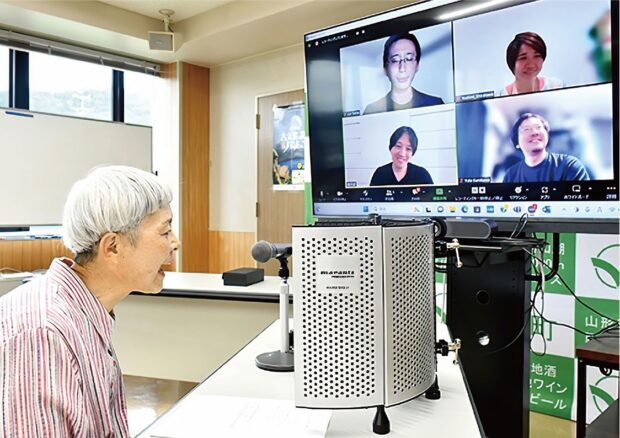
You worked with local speakers to build AI systems that could engage with the dialect of Nishikawa Town, Yamagata Prefecture, which is at risk of disappearing. Could you talk about this project and how it led to your more recent work?
It all started when I went to Nishikawa Town, Yamagata Prefecture, where there are many dialects. People there speak a very particular form of Japanese. I am Japanese and they are Japanese, of course. Nevertheless, even for me it can be very difficult to understand what they are saying because the dialect is so strong.
Artificial intelligence, something like ChatGPT, also cannot capture what is happening when it encounters the Yamagata dialect. So I started thinking: what is the “standard” for artificial intelligence?
Languages contain culture, physical experience, ethics, stories—there are many important aspects of culture inside dialects and languages. If artificial intelligence learns only from standard Japanese, what happens to dialect culture?
When we develop artificial intelligence, we often remove the outliers first in order to obtain greater accuracy. The outliers disappear during the development process.
But is that okay? Is standard language the only language that is important for the future?
In Nishikawa Town, Yamagata Prefecture, I met many kind and interesting people. I felt that I had to preserve this culture and think about how artificial intelligence could engage with it differently.
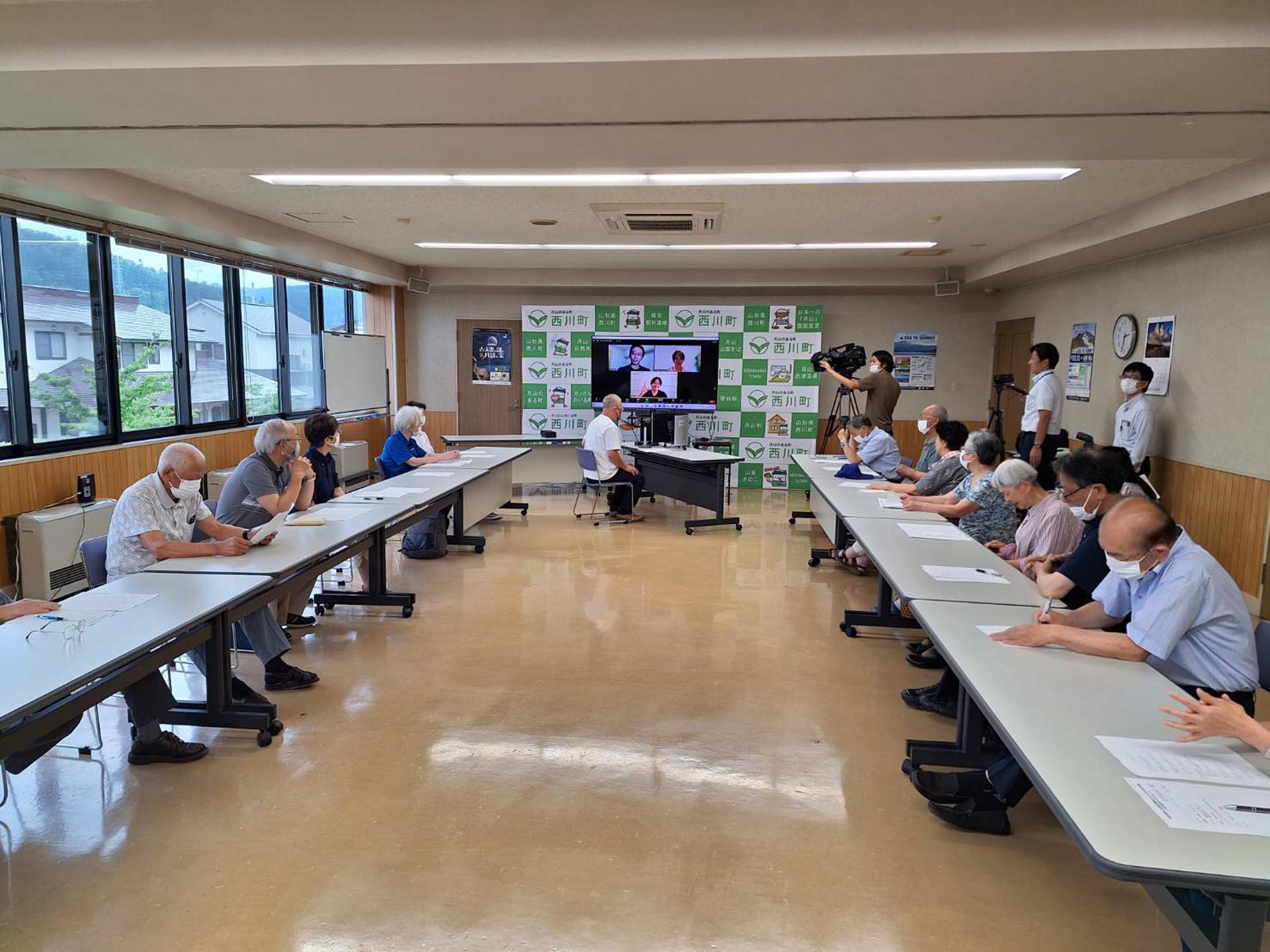
How did you go about selecting people, and how did you interact with them?
We held an audition. Around twenty people participated, and I think almost everyone was around seventy years old.
They spoke a lot of dialect.
The dialect is disappearing across generations.
Younger people in Yamagata Prefecture often do not speak it anymore, so older people are the ones who still know it.
I thought: I must preserve this culture, and I must think about these languages. So, I collected a lot of voice data from them.
Given your background creating patents, are you planning to create a patent that would allow artificial intelligence to include these forms of difference and bias? Or do you see your artistic work and your technological work as parallel practices?
Indeed, I consider artistic work and technological work as parallel practices.
I want the artwork to remain open because I want to distribute these questions as widely as possible. In my company I created many patents, but in art I am not thinking about patents right now. I want the work to remain open. Within art, I want to make more works and create more questions. I want to meet more people, talk with them and question things together, and then think about what the next action should be.
Was there anything that surprised you about the public response when you presented your work?
When I show my films to people—at universities, art festivals, or exhibitions—many people come and talk to me. They respond to the questions that I am asking.
They have many different jobs, ages, genders and backgrounds, so I can gather many different ways of thinking.
For example, a doctor saw my work and told me: “This is a very important question. When we become doctors, we have to think about this from the beginning. But when we are busy with surgery, perhaps sometimes we forget.”
That made me realize that artwork can connect with many different professions. And those professions give me many hints. Afterwards, I can think about new works. Through questions, perhaps we can connect without borders.
When I came here, I realized that although we come from different countries, we can talk about the same issues. That makes me very happy.
Are you planning a new work?
Yes. I am thinking about two works. One is connected to Indonesia, and the other is connected to Yamagata Prefecture.
The Yamagata work is a film.
When I searched using artificial intelligence, I encountered information that the AI did not know. There is a lake called Lake Gassan in Nishikawa Town, Yamagata Prefecture, and at the bottom of the lake there used to be a village.
A dam was built, the area filled with water, and the village disappeared beneath it. Around 112 households had lived there. There were not only houses, but also a school and a shrine. There are many memories there. But when I searched for this using artificial intelligence, the AI did not know about it.
Isn’t that curious?
Artificial intelligence seems as though it knows everything, but it does not.
It only gave me two pictures related to that situation.
So I went to Yamagata Prefecture and met many older people. I asked them: “Do you know about this? Do you remember this?”
I interviewed them, and I found a huge archive of photographs.
I also discovered that there had been a school there, and that the former students still gather once a year and sing their old school song.
I want to film that. I want to know what kind of song it is.
This is knowledge that artificial intelligence did not know.
There are many situations that we do not know about, but we behave as though we know everything.
Looking forward to it. Meanwhile, congratulations on your Honorary Mention in the Digital Humanity category of the Prix Ars Electronica 2026 that you received for the work AI’s Silent Omissions (2025)
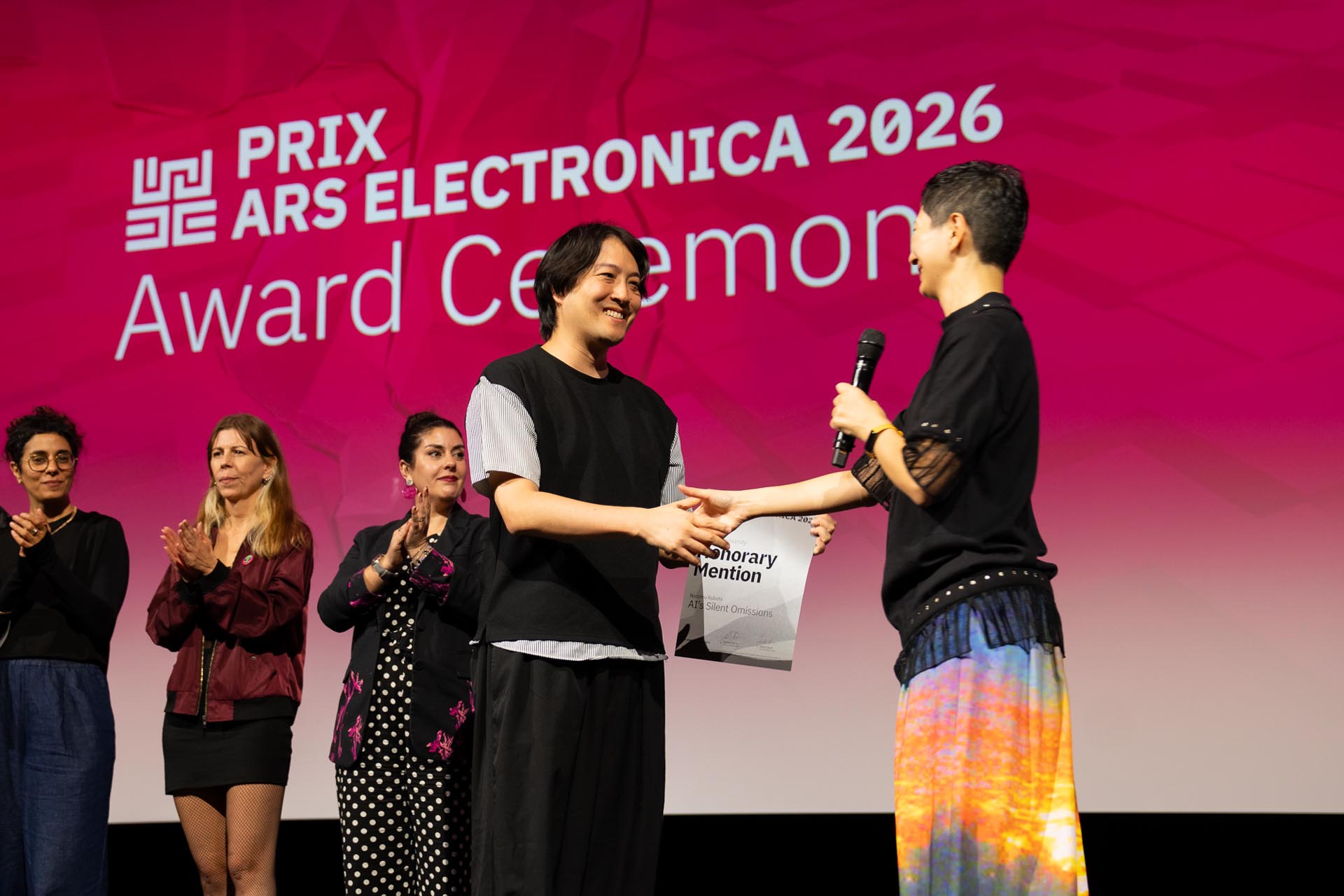
images: (cover 1) Nozomu Kubota, portrait, photo: Yuto Kurokawa (2) Nozomu Kubota, «AI’s Silent Omissions», 2025, interview (3) Nozomu Kubota, «AI’s Silent Omissions», 2025, screening at Ars Electronica 2026, Linz, Austria, photo: Yuto Kurokawa (4) Nozomu Kubota, «Saving Fading Dialects with AI», 2023 (5) Nozomu Kubota, dialect auditions in Yamagata Prefecture, 2023 (6) Nozomu Kubota, «AI’s Silent Omissions», 2025, screening at Ars Electronica 2026, Linz, Austria, photo: Yuto Kurokawa (7) Nozomu Kubota, «AI’s Silent Omissions», 2026, screening at Ars Electronica 2026, Linz, Austria, photo: Yuto Kurokawa (8) Nozomu Kubota, «AI’s Silent Omissions», 2025 (9)Nozomu Kubota receiving the Honorary Mention for Digital Humanities at Prix Ars Electronica, photo: Yuto Kurokawa