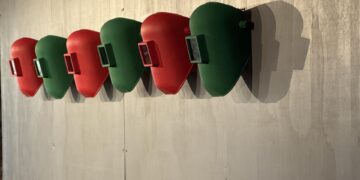
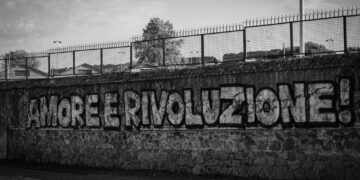



At the Pelanda in the former Mattatoio, as part of the Romaeuropa Festival, the national premiere of Muette was presented, first and foremost, as a spatial and political redefinition of the gaze.
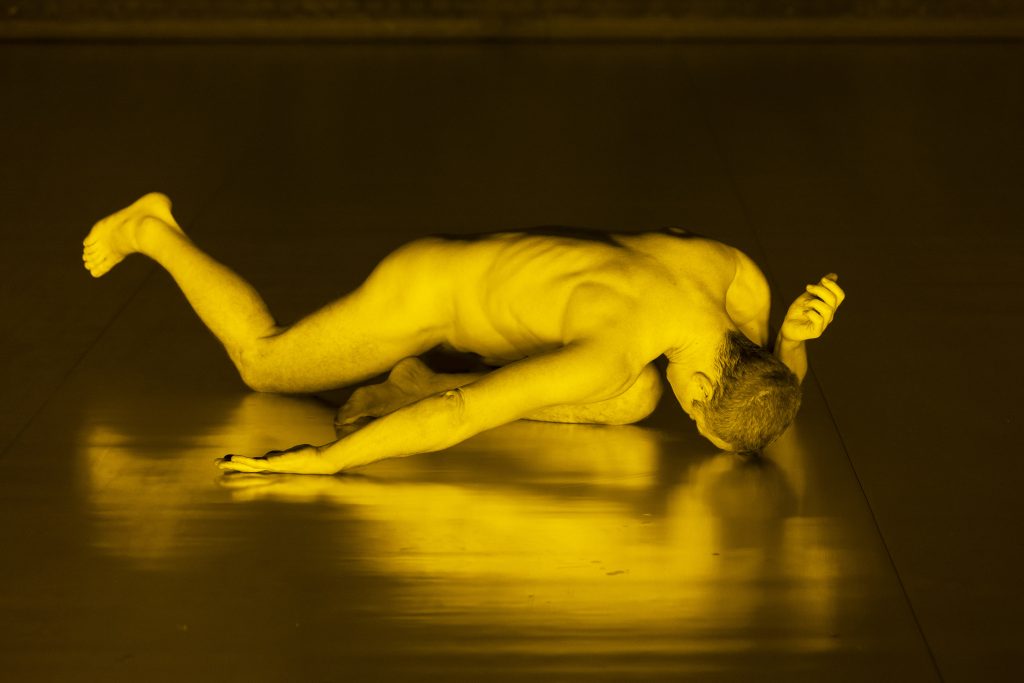
The space appears stripped bare, devoid even of the body that will inhabit it, and the audience is positioned at an almost clinical proximity – so close that there is nowhere to hide one’s gaze.
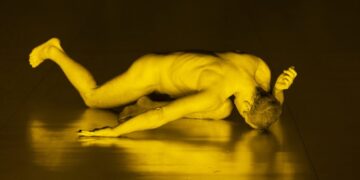
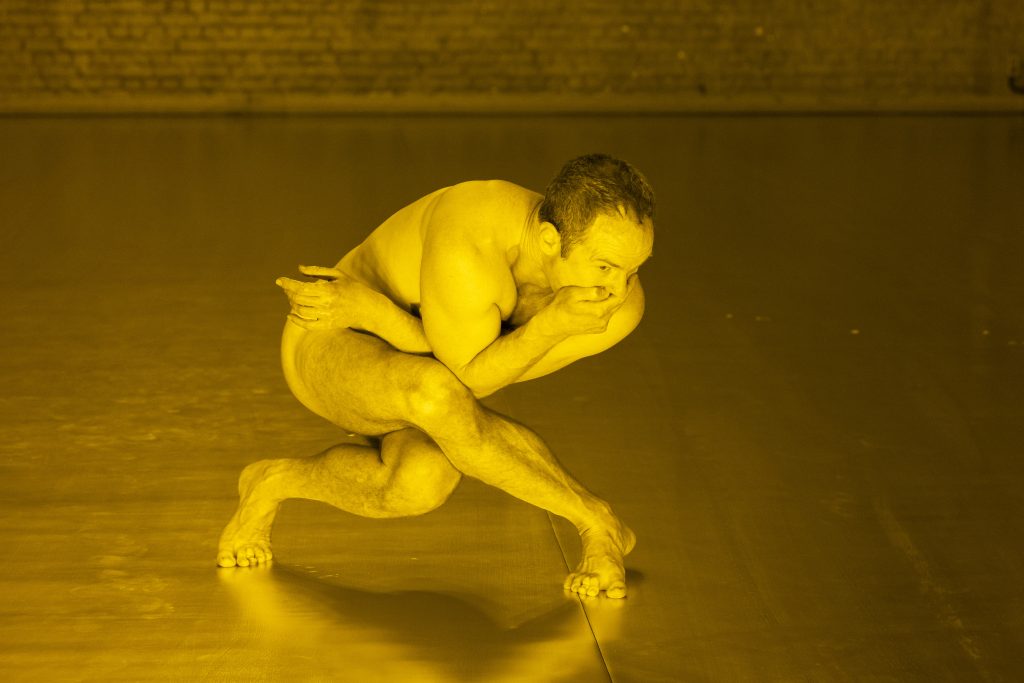
There is no stage to rely on. Everything begins from a marginal point, a corner on the periphery that the eye must seek out, shifting from the centre to the edge with a movement that demands an almost unconscious stance. It is there that Boris Charmatz begins to undress, and it is from there that the score begins: a mature man undressing to one side, triggering in the viewer a precise perception of their own bodily memory – that of a childhood punishment. And it is precisely this initial gesture, performed at the edge of the field of vision, that immediately establishes the coordinates of a work centred on a vulnerable and exposed intimacy – as wounded as that of childhood can be – even before the choreographic action takes shape.
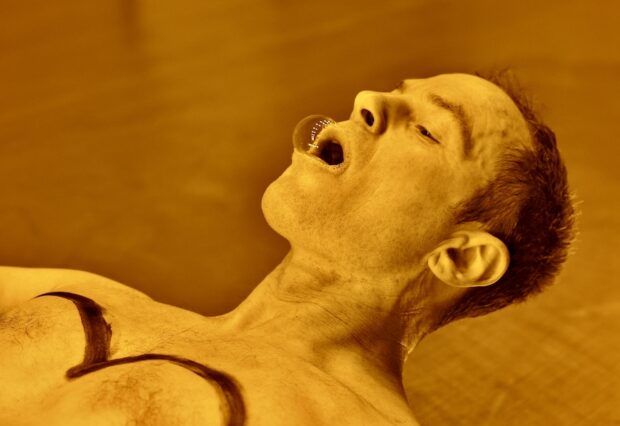
In Muette, the voice finds no outlet; indeed, the dynamic is reversed, the sound remains within the body and implodes. For fifty minutes, Charmatz remains alone, riven by repressed tensions, knots that tighten and loosen without ever allowing the release of a catharsis. The mouth becomes the centre of gravity of the entire solo; it is no longer an organ of phonation but a threshold, a biological membrane that retains and reverberates through the musculature that which remains unspeakable. Into this trajectory is woven a micro-event of disarming power: a bubble of saliva allowed to surface between the lips and held for a long time against every natural impulse.
Charmatz moves with micrometric and fragile caution so that the friction of the air does not cause it to burst. What at first glance might appear to be a childish remnant is transformed into an extremely rigorous choreographic device, an infinitesimal organic constraint that governs the biomechanics of the entire body axis, subordinating the dance to an absolute physiological tension.
Yves Godin’s lighting design, devoid of variations in intensity or chiaroscuro, eliminates any shadow in which to take refuge. Without a musical rhythm to regulate duration, temporality expands and anchors itself to the organic reality. The experience gradually shifts from the visual to the auditory and haptic planes, revealing a testimony that is no longer offered solely to the eye, but is perceived through hearing and through the body, as if every minute sound were reaching the viewer’s skin in the form of vibration, friction and damp contact. Charmatz evokes a veritable ‘dance that thunders silently’, recalling the perceptual paradox of anechoic chambers, or Joseph Beuys’s felt-lined rooms: places where, with ambient sound removed, the physiological noises of those entering are amplified beyond measure.
The same occurs in the Pelanda hall: with artificial sound eliminated, the resonance chamber becomes the architecture itself, and the audience discovers the weight of their own breath and body, which in turn become the substance of that silent voice. It is within this resonant device that violence emerges in its purely organic terms, rejecting any illustrative or didactic digression. And it is precisely through secretion, dampness, sweat and involuntary contraction that abuse resides in the strain of what the body is forced to endure and repress. The origin of this silence lies in a specific creative circumstance: whilst working on Liberté Cathédrale (2023), as he engaged with the testimonies of victims of abuse within the Church, Charmatz recognised the ethical impossibility of verbalising or dramatising those words on stage. From this aphasia springs a political and testimonial silence, corresponding to the void left by voices erased from public hearing.
Ultimately, the most radical tension in Muette lies in the abolition of any safe distance between observer and observed. The proximity to the naked body imposes a direct responsibility on the audience, where the gaze is no longer a neutral aesthetic witness, but an active part of a friction that questions the boundaries of exposure. The pressing issues of the present – from armed conflicts to ecological collapse and the fragility of democracies – act upon the stage not as narrated themes, but as gravitational forces that the skeletal and muscular structure must bear the burden of supporting. It is precisely in this way that Muette distances itself from any consolatory logic.
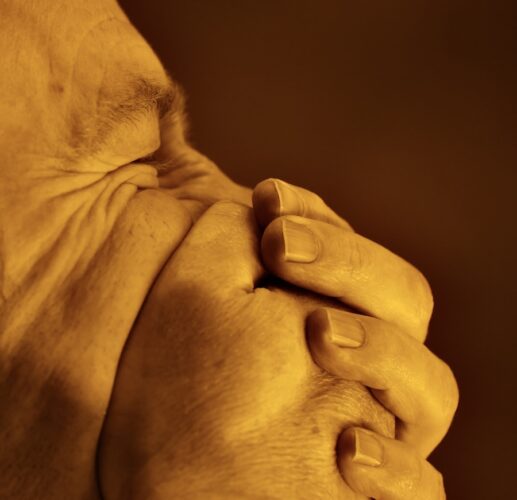
By holding the scream within the confines of the oral cavity, Charmatz compels the auditorium to share a state of unease and sensory apnea. A rigorous and ruthless solo, capable of transforming silence from an absence into a forceful substance, the effects of which continue to reverberate well beyond the end of the performance.
Boris Charmatz | Terrain, Mouette, Mattatoio, Rome, Romaeuropa Festival 2026, 02-04.10.2026
images: (cover – 1-3-4) Boris Charmatz, «Muette», Romaeuropa Festival 2026, photo: Laurent PHILIPPE (2-3) ) Boris Charmatz, «Muette», Romaeuropa Festival 2026, photo: César Vayssié