


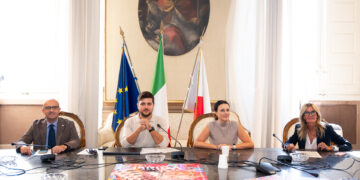


As every year, the exhibition and the following days, featuring the ‘Ibrida’ intermedia arts festival in Forlì, offer two opportunities for exploration and exchange that go beyond the event itself. For the past eleven years, Francesca Leoni and Davide Mastrangelo have been the creators and curators of this initiative. Once again, they have set aside their roles as artists to open themselves up to the Italian and international multimedia research landscape, of which they are themselves a part. They are enriching the local cultural offering and testing themselves through a different kind of professionalism. Year after year, this exchange is enriching a network of artists, researchers and institutions in terms of both number and diversity.

This is how the curators of the Vertov Project introduce the exhibition, which features video art, interactive installations, virtual reality, augmented reality, artificial intelligence, mixed reality and audiovisual experimentation: ‘The project was conceived around the word “interference”, understood not as an error or a disturbance to be eliminated, but as a possibility for deviation, transformation and openness to something unexpected.’

‘Despite the diversity of their artistic languages and approaches, the works brought together in Interference address some of the most pressing issues of our time: the body and its transformations, the construction of identity, personal and collective memory, our relationship with the landscape, the dynamics of power, and the way in which images influence our perception of reality.’

And furthermore… “We live in an age in which images, information and even relationships are increasingly filtered by algorithms, which tend to show us what we already know, what resembles us and what confirms our preferences,” they add. “Interference aims to disrupt this predictable continuity and invite the public to slow down, observe and encounter something they weren’t necessarily looking for.”

With the aim of restoring visibility to the strength of women’s artistic research – which has been present on the international scene for years – Leoni and Mastrangelo frame it in the context of their selection criteria as follows: ‘These are artists who utilise advanced technologies, lead interdisciplinary groups, collaborate with researchers, programmers and scientific institutions, and have forged independent and authoritative professional careers. The exhibition also aims to challenge the art world itself, where women’s contribution to technological experimentation does not always receive recognition commensurate with its importance. These artists demonstrate that women are not marginal figures in digital art, but key players in the invention of its languages.”

As every year, the exhibition precedes and follows the four action-packed days of the Festival taking place from 17 to 20 October, during which the works of the exhibiting artists will be complemented by performances, talks and workshops in the evocative setting of the Fabrica delle candele.
Interference. The image is never just an image, curated by Vertov Project (Francesca Leoni, Davide Mastrangelo), Fondazione Dino Zoli, Forlì, 1 September–11 October 2026. Visit the website here for the exhibition opening hours (free admission) and for the updated and full programme of the Ibrida Festival, 17–20 September 2026
The exhibition is sponsored by the Department of Culture and the Department for Equal Opportunities of Forlì City Council, the Emilia-Romagna Region and the Cassa dei Risparmi Foundation. It is supported by the BCCs of Ravenna, Forlì and Imola, and by Romagna Iniziative. Featuring works by: Chiara Passa, Rä di Martino, Rebecca Merlic, Anaisa Franco, Elena Bellantoni, Francesca Grilli, Giuliana Cunéaz, Debora Hirsch, Kika Nicolela, Aline Motta, biarritzzz and Özge Samancı.
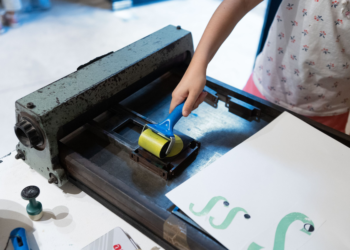
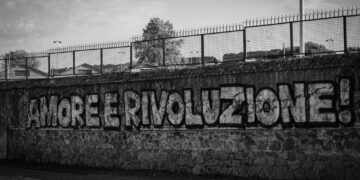
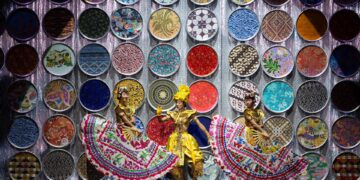
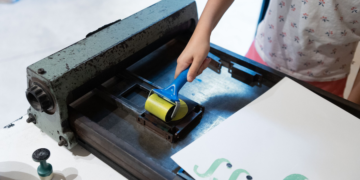
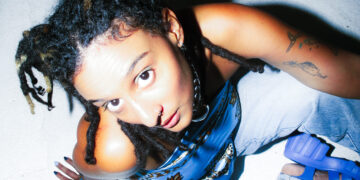
images: (cover 1) Aline Motta, ‘Se o mar tivesse varandas’, 2017 (2) Francesca Grilli, ‘Rays’, 2021, photo: Karolien Chromiak (3) Elena Bellantoni, ‘Ruinate’, 2026 (4) Giualiana Cuneaz, ‘Nahuales’, 2024, courtesy of the artist (5) Ra di Martino, ‘Fx Dream’, 2018