



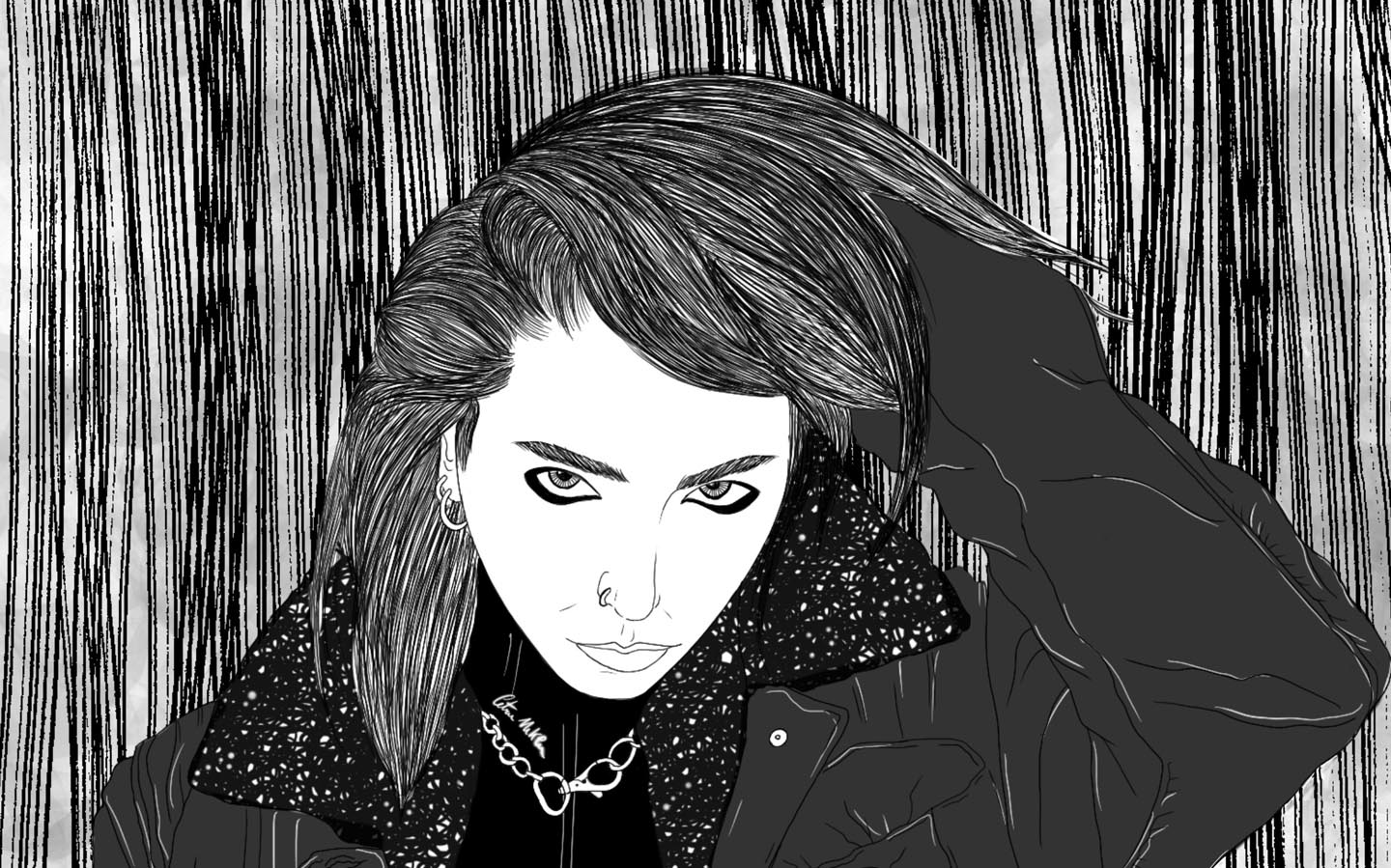
With a huge generational leap, Francesca Cornacchini is the third artist to be interviewed. Born in 1991, her research spans various fields involving numerous artistic techniques, always using a deflagrating expressive language, of an elegant violence, with nuances that are sometimes dark and often alienating. Listening to Francesca Cornacchini means focusing on a new generation of artists, preparing oneself to be bombarded by themes that are as topical as they are complex. It involves looking at a contemporary, absolute artistic expression, in which the facts and nuances of our lives are mixed with contemporary symbolism and objects and signs of the present.
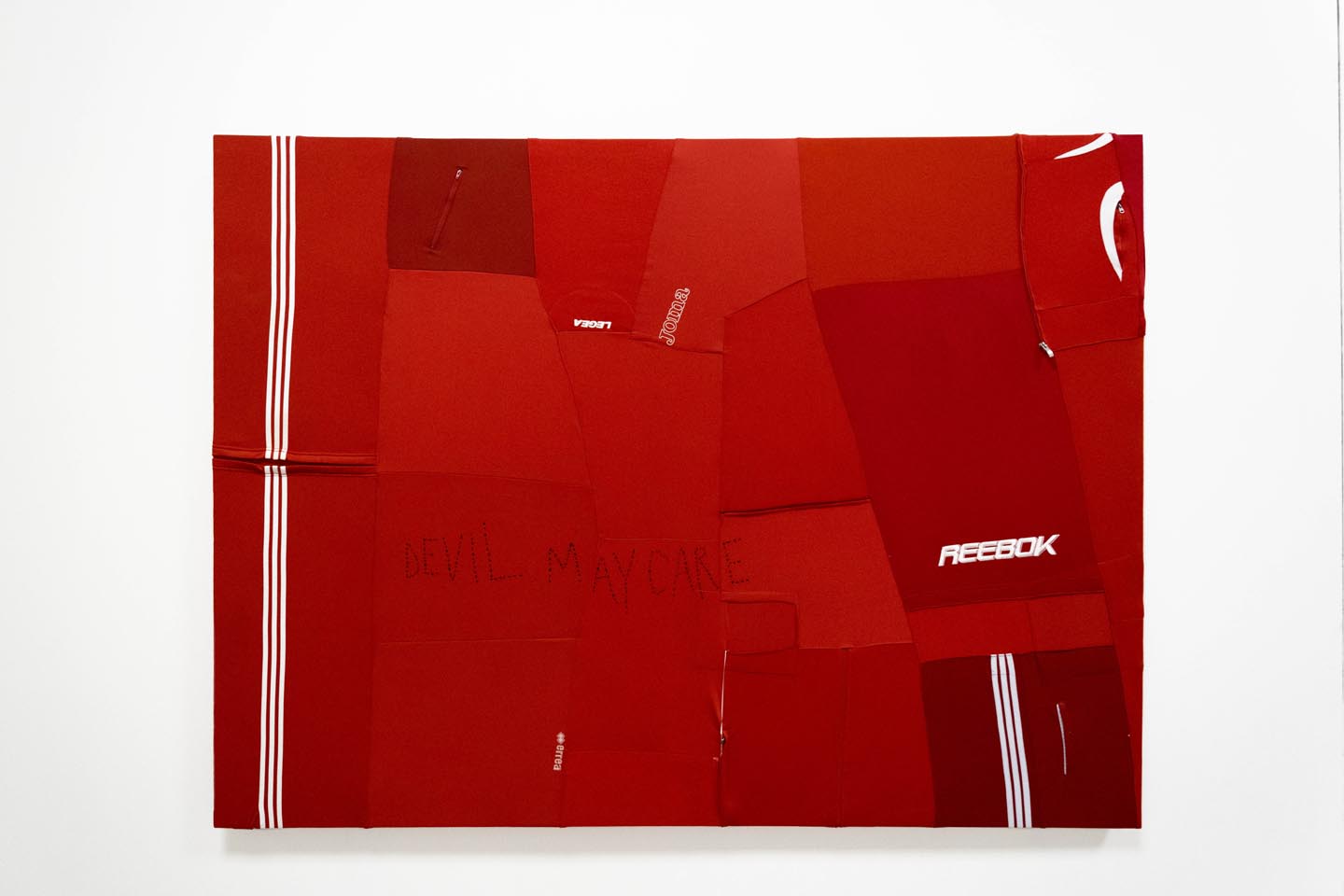
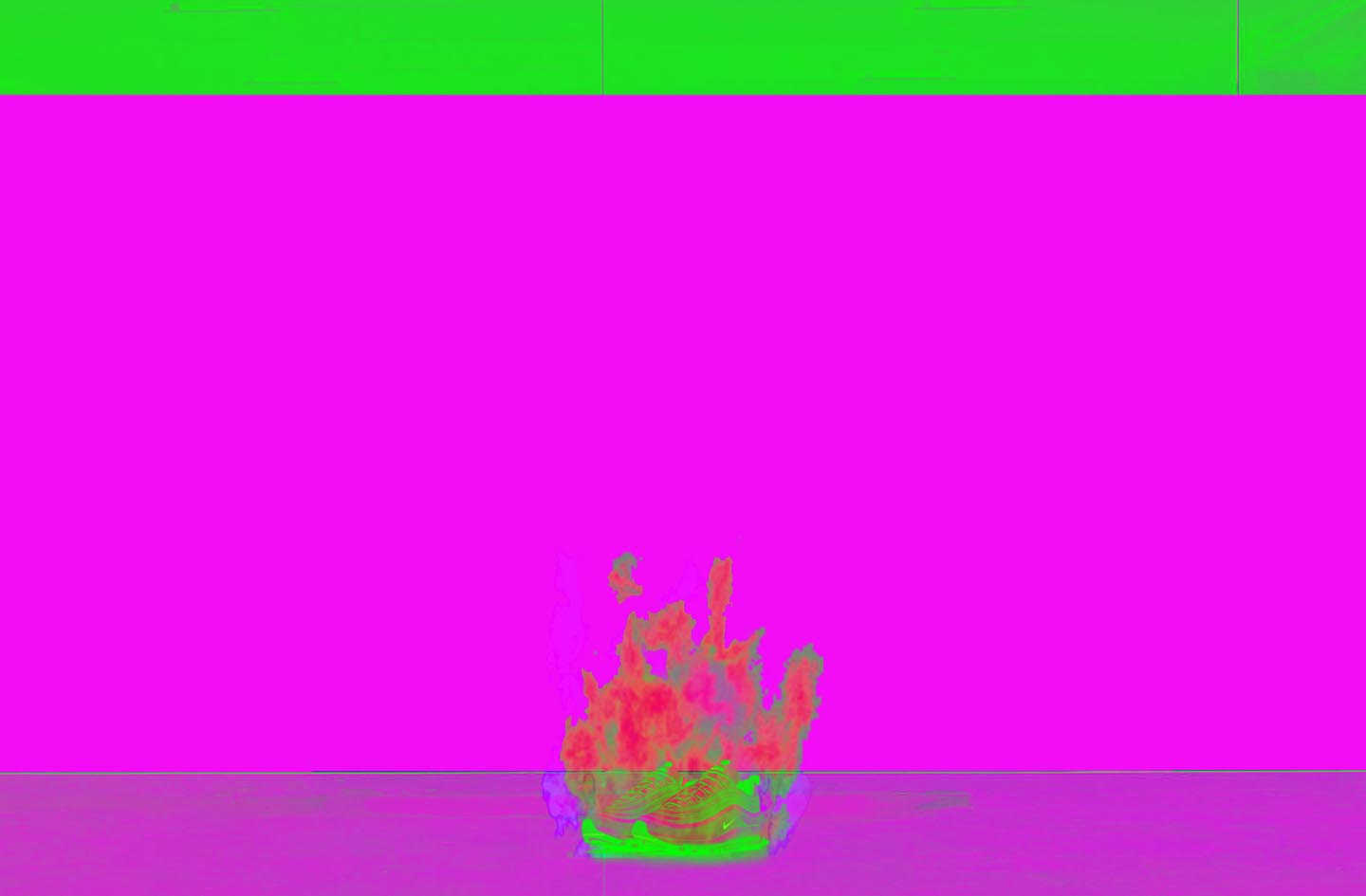
Fabio Giagnacovo: This year, two of your works were displayed at the exhibition Fou Rire, which was curated by Angelica Gatto and Simone Zacchini, at Galleria 1/9 in Rome: ‘Devil May Care’, a Satanic canvas composed of red sweatpants patches and cigarette burns; and ‘Crush Girl, the smell of smoke’, a factual photographic testimony of a flamboyant performance in the same gallery with overlapping temporal and semantic planes. However, when thinking about your other works, we find environmental installations, assemblages, digital graphics, contemporary abstractions, words and phrases sprayed on the walls, objects taken from reality and transformed into signs – extremely alienating elements. How important is material and immaterial experimentation to you? And does this constant experimentation have anything to do with the intrinsic features of our present time?
Francesca Cornacchini: Hello!
I’d like to quote a text that Fabrizio del Signore – a gallery owner, collector but, first and foremost, a highly cultured friend – wrote about my work on the occasion of the Gubbio Biennial, curated by Spazio Taverna.
“Scientists teach us that chaos and randomness are different concepts and that the result of deterministic chaos is never random. But scientists perhaps do not consider art, a very powerful tool at the disposal of a cultural attitude that Edgar Morin would call complex thinking.”
My artistic output does not therefore involve bland, casual experimentation, but rather complex communicative research, aimed at a direct, symbolic linguistic form that characterises contemporary art.
I don’t feel particularly represented by experimentation, but rather by the research that goes on “behind closed doors” which leads to the realisation of the finished work, whatever form it takes.
So I don’t think it’s at all a prerogative of the present time, but rather the product of a critical, complex and conscious practice.
Everything I do is a thermodynamic effort carried out to the point of exhaustion!
Technopessimism and underground aesthetics – these themes, which are very dear to me, recur frequently in your work. Themes that, although found in different ways and in different forms, acquire an absolute generational character when addressed by your generation. What do you think? In your opinion, how do these two issues relate to each other? And what is left, today, in the analogue-digital space we live in every day – one that has consumed the underground and its sense of being countercultural?
In the questions I get asked the most, I frequently sense this alarmist attitude towards the fate of countercultures!
But don’t worry, they’ve always managed to resist!
Indeed, counterculture, the underground, is the breeding ground for pioneering, romantic, political thought.
Every great revolution starts with a counterculture.
The underground is heroic!
Technopessimism is not an a priori distrust of technology, but rather a criticism of the capitalist use of technological progress.
Progress is not progress if it’s not aimed at the collective well-being.
What the bee is to the flower, we are to technology!
Technopessimism is a highly political concept rooted in aesthetic immediacy.
Think of how much you enjoy seeing the ENI logo, the six-legged dog, catch fire and melt; a stuffed Pikachu animal gone horribly wrong; or an old, abandoned Google office in an arid Californian desert.
Let’s take ‘Devil May Care’ as an example. The use of the logo is central to the creation of the work.
The symbol is remodelled in the first place by dismembering the tracksuits – i.e. the composition, let’s say the aesthetics of the work – and, secondly, in socio-political terms.
This is because logos such as Adidas are strongly linked to a certain generation, to a certain subcultural milieu linked to raves and, in some cases, also to illegality. I’m thinking of the ‘gopniks‘, Russian boys and girls involved in petty crime and their iconic Slav squat.
The decay of the logo, or symbol, produces a certain latent satisfaction. This is because the destruction of the icon, in a certain sense, sanctions the imaginary victory of the battle. It gives a certain feeling of hope, a feeling that generationally we are inclined to ignore.
But, in fact, this is not the case!
It’s in countercultural resistance that I see the seeds of new critical thinking and this is transgenerational!
 Immediate elements often recur in your work, strongly linked to our contemporary world (historical) and our present (perceptual) – sometimes also starting from a strongly historicised, popular symbolism. I’m thinking, for example, of ‘Win the Palio and Kiss Me’, ‘Vestale della Dea’ (Vestal of the Goddess), ‘Nuda Proprietà’ (Naked Property) and ‘Volpe di Teumesso’ (Teumessian Fox). I’m reminded of an article in Not, by Remo Grillo, that I read some time ago, about the famous MOTH/LAMP meme and its profound, philosophical implications, while appearing to us in its utter simplicity. Increasingly, artworks and memes on social networks are becoming confused, substantially similar in appearance – as Valentina Tanni tells us. So, in your opinion, what distinguishes a work of art from everything else? For example, your ‘NAKED’ inscription on the red-lit shop window opens up a universe of references and sensations, but in its photographic reproduction on the Internet, what becomes of a work so tied to its analogue space?
FC: In the article in question, it’s just anthropocentric philosophizing.
The meme, like Grillo’s musings, overlooks and evades the evolutionary drama of moth flight, never understanding this as a real culture that escapes our interpretation.
Just as sailors with the North Star, moths chart their course by the Moon, it doesn’t matter whether this is by will or desire, flying at a 90° angle in relation to the strongest source of light.
Once our satellite, the Moon, was this only source of light, but try explaining Technopessimism to moths, alongside artificial lighting and the evolutionary ‘slowness’ of species!
In short, if we consider Grillo’s article as existential-Darwinism, yet wanting to play the game anyway, it all depends on the intention: the flight of a moth, as a meme, as an artwork.
What happens to the souvenir photo in your image gallery, taken that time you went to the Louvre and photographed the Mona Lisa?
Just one more image!
They’re all just images. Which semiotic field we associate them with depends on our initial intention and interpretation.
When pointing, we no longer look at the finger but at the object or situation being pointed at.
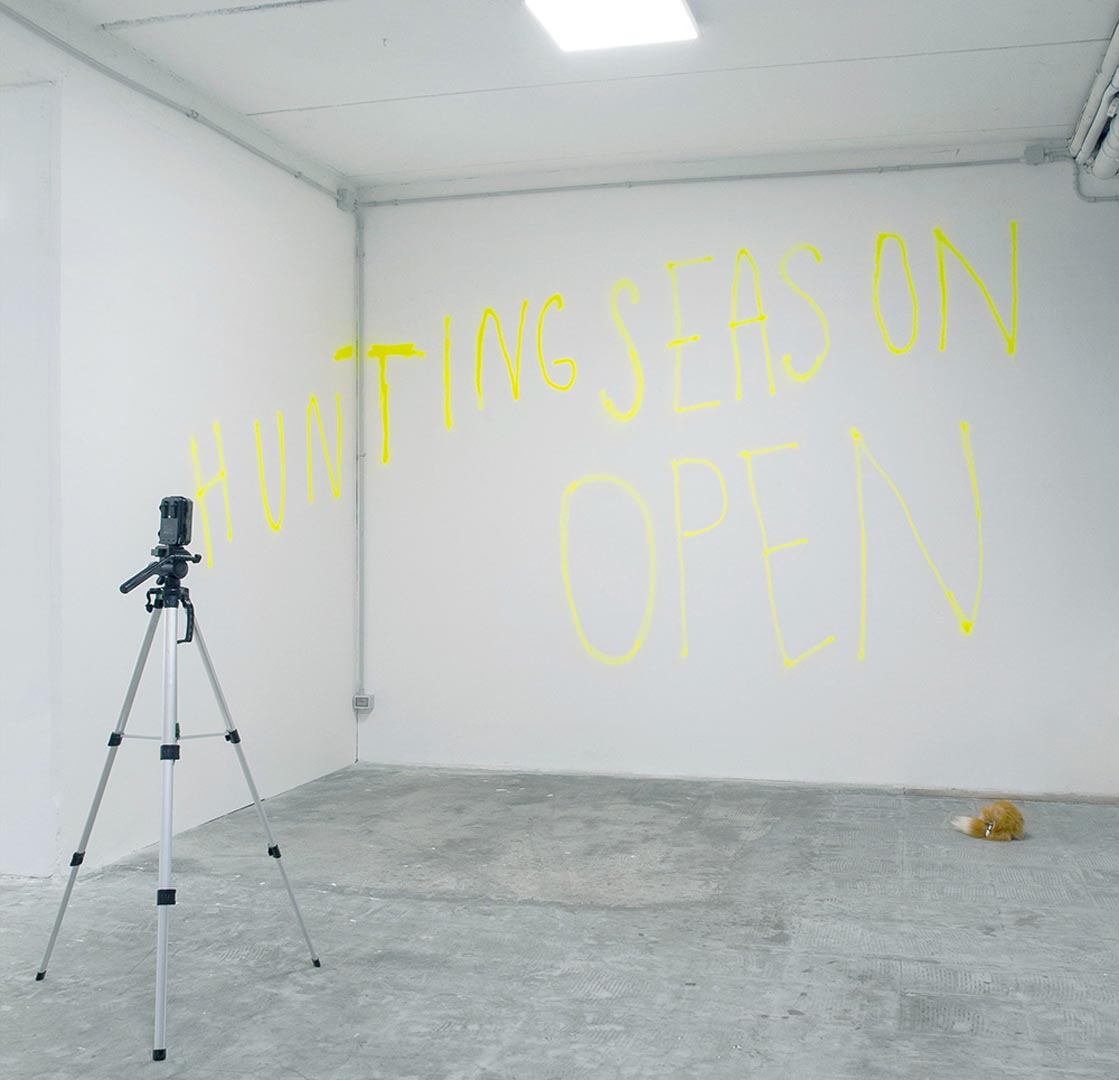
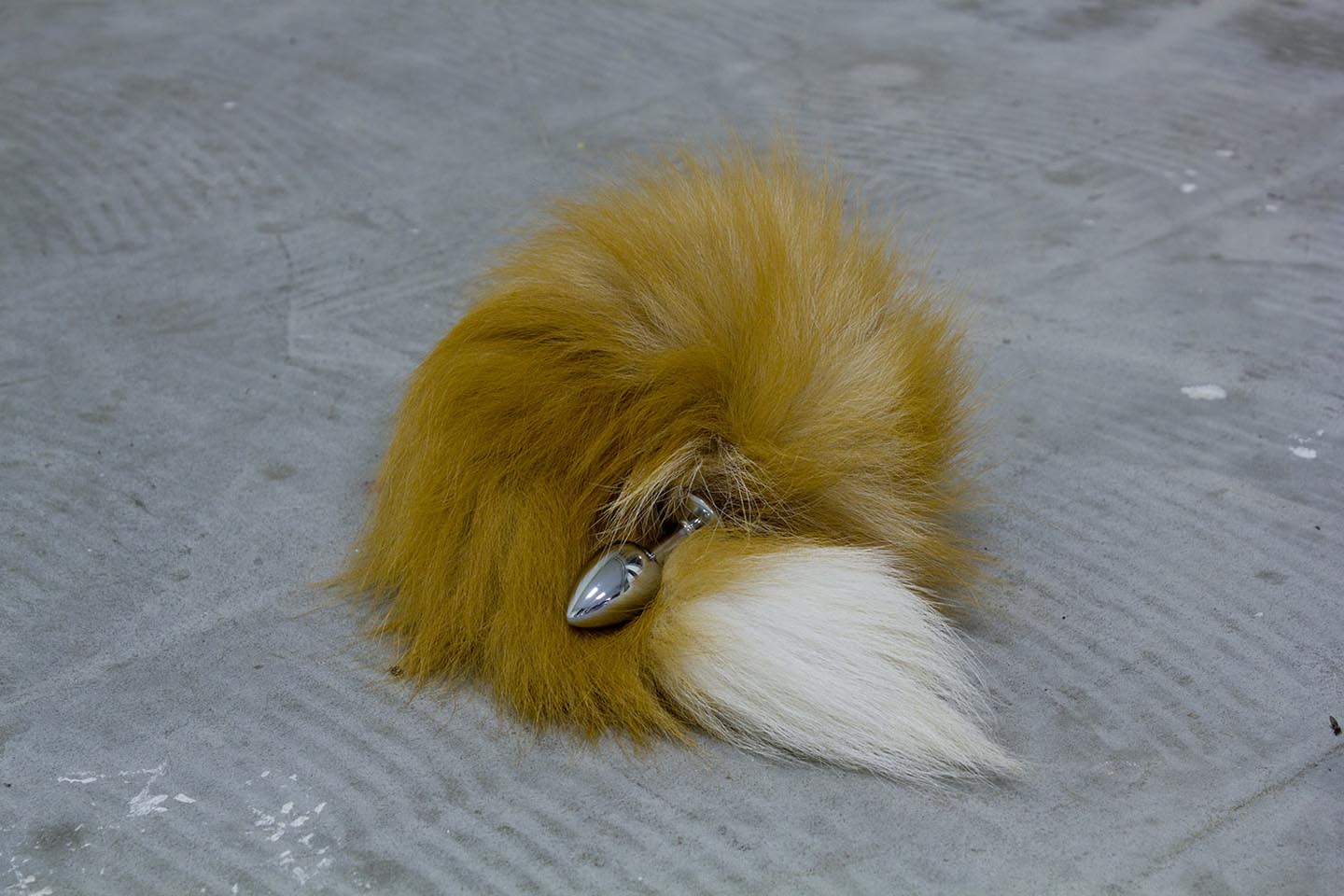
Take for example ‘Volpe di Teumesso’ (Teumessian Fox), a work I produced between 2018 and 2019.
A phototrap, which took pictures thanks to a motion and proximity sensor, framed a sex toy, consisting of a plug and a fox tail, placed on the ground.
The spray-painted inscription ‘Hunting Season Open’ towered on the wall.
Users were attracted by the ambiguous object, the sex toy, so they were immortalised by the phototrap which captured them.
Who was the prey? The work is about obsession, the tension that can be generated within a relationship, be it love or work.
Art and memes are related!
Since 2018, you have been part of the group of artists Spazio In Situ. Artist-run spaces have proliferated in recent years, and it is not difficult to understand why, emphasising even more, if ever there was a need, the contemporary role of the artist. How important are these spaces for an artist and, in general, for the neighbourhood and the host city? And how important is it to ‘network’ in the art space, one full of blind spots and spiked routes?
Artist-run spaces are places that make art less elitist.
They cut costs (e.g. rent), the equipment is often shared, the ideas exchanged between different group members allows for a consistent cultural dissemination and, above all, we help each other!
Ironically, we could call them self-managed anarcho-socialist places, which sometimes have a more avant-garde cultural role than institutional ones, commonly associated with the work of buying and selling!
We live in a terribly uncertain period in Italy, economically and culturally speaking.
Those who are involved in culture, like us artists, must come together and create networks to disseminate ideas, aesthetics, take political positions, influence market trends and dencentralise the market from those ‘who have’ to those ‘who know’.
It’s no coincidence that two years ago I founded D3cam3ron3, a residency for artists and intellectuals, which centres otium as a form of reflection and study freed from hyper-production and, of course, hopes to form and expand the network of relationships triggered in the art and culture system.
You attended the RUFA (Rome University of Fine Art) – graduating from the three-year degree programme in Set Design and the two-year programme in Sculpture. How important was this for your artistic training? In your opinion, is there anything that could be improved in the field of art education?
FC: I enrolled at RUFA in 2010, so I can’t tell you how it is to date!
I find, however, that any form of study must be approached with a critical spirit, and diluted through one’s own interests, research and reading. In short, with your own training!
At RUFA I met my comrades from Spazio In Situ, which was just beginning to emerge.
I have to say that much of my experience came from the artist-run space, from the exchanges with my colleagues the relationship with cultural institutes when we were hosting exhibitions.
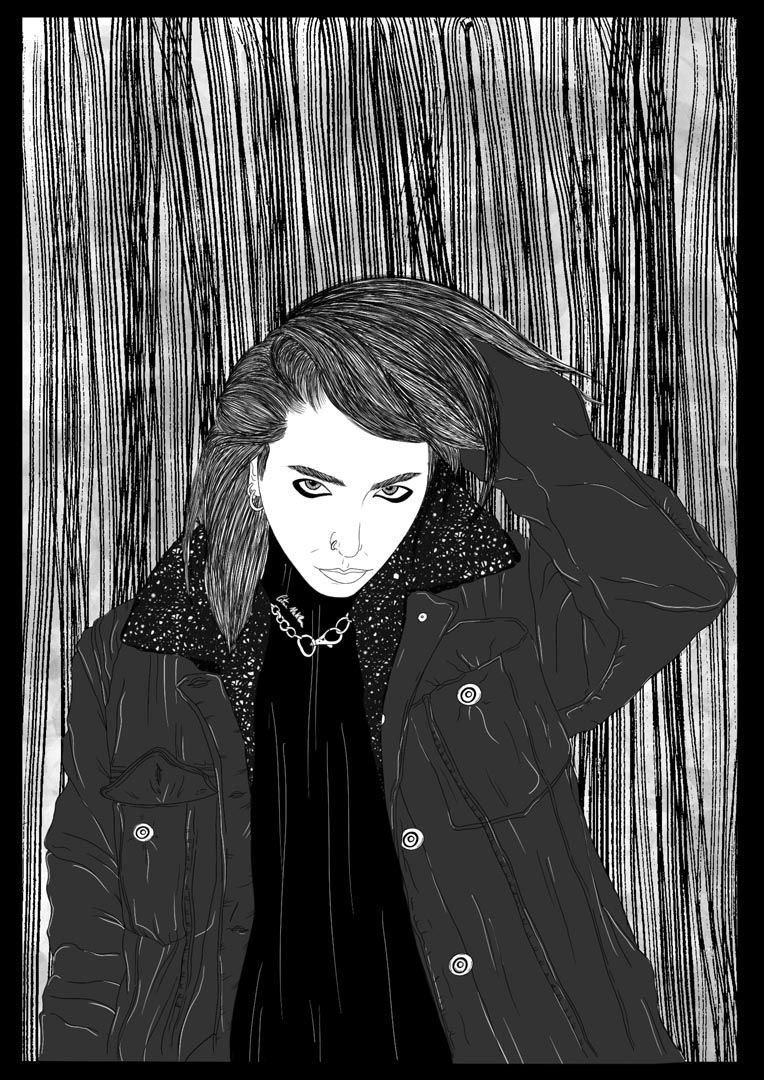
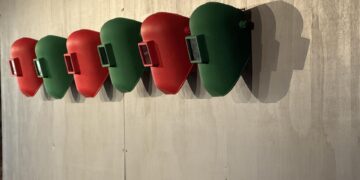
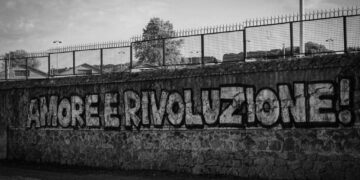
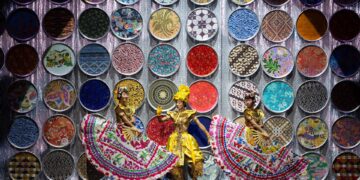
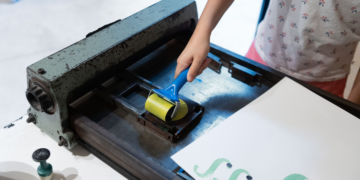
images: (cover 1) Francesca Cornacchini, Devil May Care (2) Francesca Cornacchini, Silver Pessimism (3) Francesca Cornacchini, Volpe di Teumesso (4) Francesca Cornacchini, Volpe di Teumesso (detail) (5) Francesca Cornacchini, And If I Could No End In Sight, credits Chiara Cor (6) Francesca Cornacchini (illustrated by Nikla Cetra)
“Survive the Art Cube” is a series of interviews with artists from different generations. The title borrows from Brian O’Doherty’s most famous book to echo its critical slant. It aims to better understand how these artists perceive the analogue-digital space in which we are immersed and our contemporaneity, what sense and importance artistic space has today and what sense it makes in our present to make an artistic journey. Dark times call for reflection on reality and only artists, perhaps, can open our minds.
Previous Interviews:
Interview to Enrico Pulsoni, Arshake, 09.11.2023
Interview to Marinella Bettineschi, Arshake, 15.10.2023