



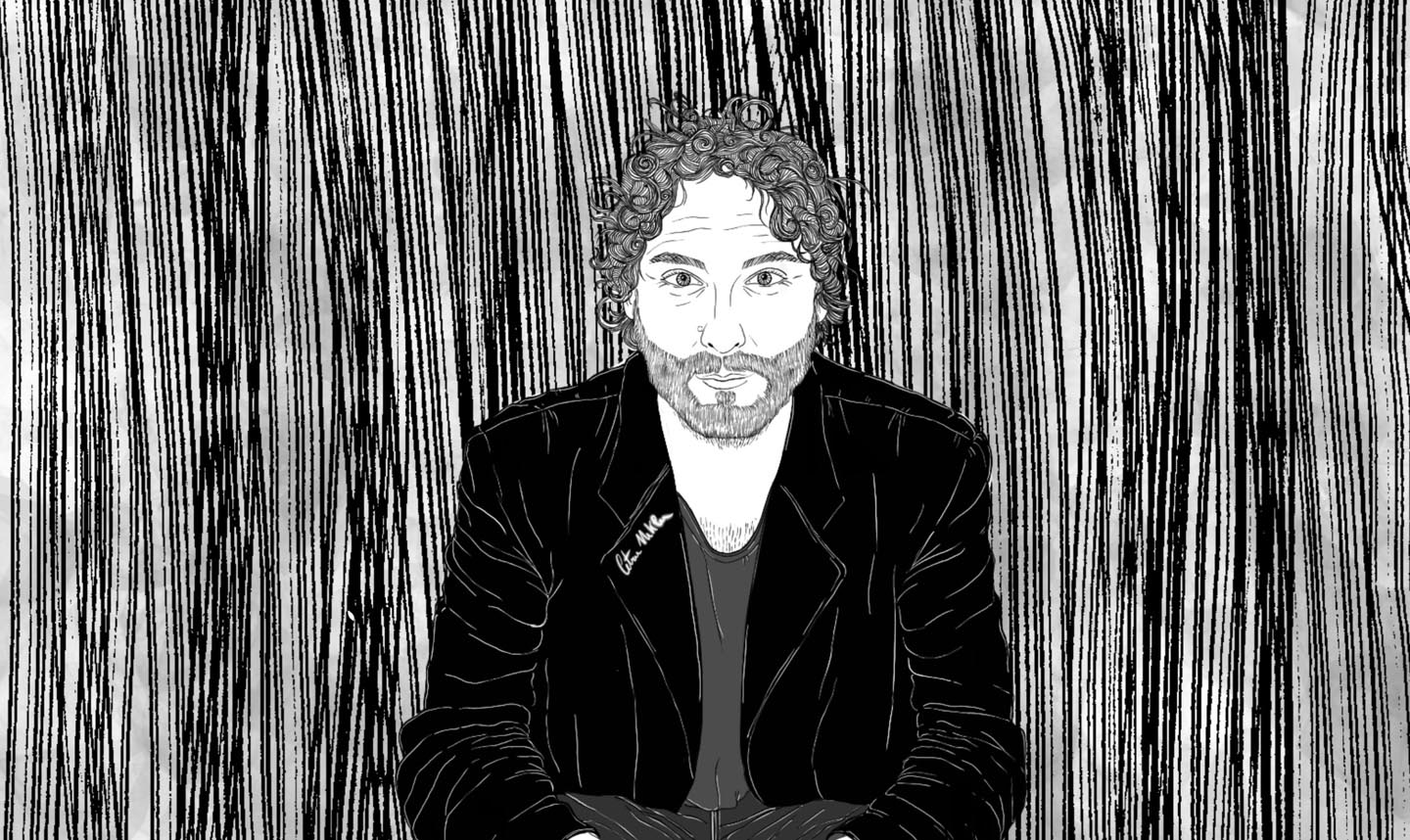
We turn to Giuseppe Pietroniro to try to better understand the value of the ‘space’ of art and the absolute value of the work. Born in Canada, moved to Molise as a child, then to Abruzzo and finally to Rome, Pietroniro has an interesting artistic career made up of works and exhibitions as heterogeneous as the reality of recent decades. A sculptor, photographer, creator of installations inside and outside art spaces, with a strong conceptual ascendancy but always faithful to matter and the palpable essence of things.
Fabio Giagnacovo: Tracing your favourite artistic medium is an arduous task – you use, often mixing them together, photography, drawing, sometimes geometric, sometimes more expressive, environmental installation, and sculpture – so much so that I would think that your favourite medium is space itself, an existential and absolute coordinate (together with Time), a Pandora’s box of numerous questions: what is reality and what is illusion in our perception? What is the meaning of matter and what is the meaning of the icon, both of which are often related in your works? Or the work-space-spectator triangulation, with all its more exquisitely artistic implications? What does it mean to work on such absolute and multifaceted questions and how do we make them tangible, to extrapolate the meaning that we then detect, as spectators, in the artistic space, when the work is finished?
Giuseppe Pietroniro: The importance and choice of media is often relative to what I want to tell and the direction I want to take. I find it very stimulating to research materials, especially when they are heterogeneous, so as to create a dialogue between them, and this gives me the possibility to find continuous variations in the development of the project itself. If I can, I always direct my research towards noble materials, because through their nature it is easier to deepen the communication relationship between object and project, between space and the limit of vision, between the limit of space and the limit of the relationship between man and historical context. I am interested in the relationship between history and the spatio-temporal context in which I live and where I move energy. I have a cosmic relationship with time and consequently with nature. Space is both a physical and mental dimension, it is a container within which many things happen, physical and metaphysical. My attempt is to ‘build by removing’, subtracting as many lines as possible from the forms. What, I believe, is an added value in my practice consists in the attempt to narrate a philosophical and existential dimension through the use of everyday objects, modified to create optical illusions and formal artifices, maturing the right distance between idea and form to elaborate works that play with the double, with symmetry.
The choice of heterogeneous materials, the precise staging of these works and the essentiality of their ambiguous construction allowed me to extrapolate the objects from their original context, thus distorting them and emptying them of their original meaning and giving them different functions, reassembling their expressive energy according to a logic that responds to precise creative needs. The final objective of these installation works is always to put the observer in the condition of evaluating reality according to a new point of view, according to an unusual key of interpretation, inducing him to look with “new eyes” instead of looking for new ways.

You once said: ‘There was a time when I was convinced that in order to be a good and interesting artist, you had to come up with intellectually strong and convincing concepts. But trying to give a philosophical motivation to the work before making it blocked me, inhibited me. At a certain point I had to do a lot of mental cleansing, which coincided with my collaboration with Joseph Kosuth. First of all, what does it mean to collaborate with the conceptual artist par excellence, an artist as peculiar as Kosuth must have been? And then: looking for a philosophical motivation, intellectually strong concepts, and then not being able to find them, not being satisfied with them, and giving up, is certainly one of the reasons that leads very young artists to abandon everything and devote themselves to something else. At the same time, we are faced with disarming trivialisations (NFT come to mind). Can Art after Philosophy, with its 50 years since publication, still teach us anything?
Kosuth developed his thinking in a specific historical moment, which coincided with a season of great historical, political and cultural ferment and change in the world. These were the years leading up to ‘sixty-eight’, the student revolution of 1968. His reflection on contemporary art focuses on the self-definition of art and the use of words as the originator of the idea that art is not just presentation and representation but a language. Investigating his artistic reflection during the time I worked with him, in my formative years, was fundamental from a theoretical-linguistic point of view. He created inducements with which I intercepted that language, besides being a product of a process, also becomes a tool for accessing the codes for reading art. I don’t know how many young artists are interested in researching new languages in art or experimenting with new meanings. The current context is completely different from the context of my training. In my opinion, the theoretical and programmatic writings of Art after Philosophy, even 50 years later, can still be vital and influential, both on the formation of avant-garde thinking and on artist-work-public reflection, which still does not seem to find the right balance today. The attempt is that every artist should make a reflection so internal to art, history and society, that in addition to producing a recognition of the work as a value, it should bring the public as close as possible to the language of art.
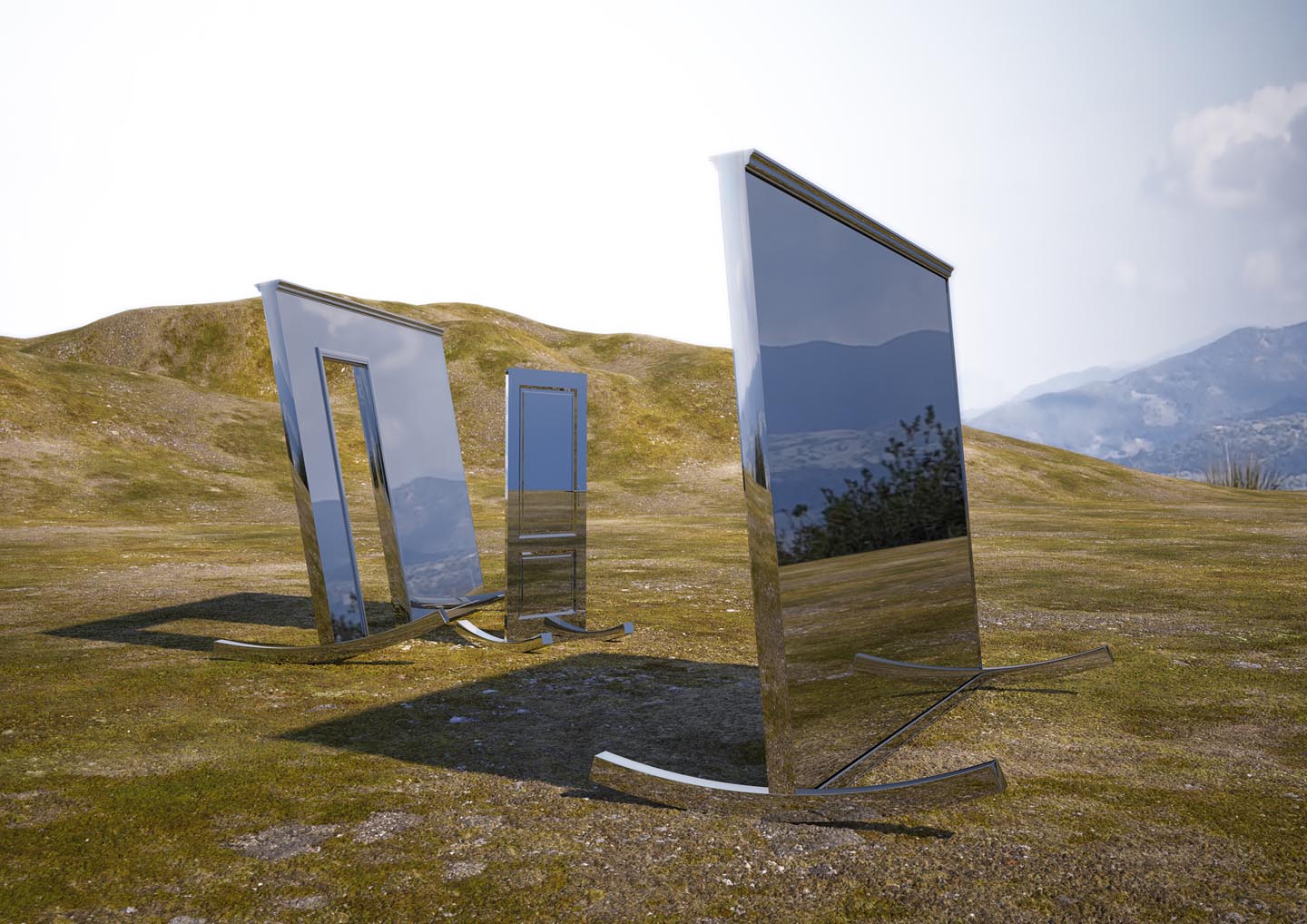
Your works often position themselves on the blurry boundary between immaterial image and material form, sometimes in contrasting terms, as for instance in IN_Stability, with the paintings that on those rocking walls somehow lose something to become something else; sometimes in symbiotic terms, as in Maquette Mirabilia, where the photograph becomes one with the sculpture and the viewer’s eye and body mingle and exchange during its fruition. As much as we are often shown digital space as a simulacrum of our analogue reality, it moves on an entirely different perception, so much so that we can say that your works are absolutely analogue, and in their translation into digital reproduction they certainly lose something. What do you think about the digital space in relation to art and new technologies such as virtual and augmented reality? Have you ever thought that these technologies could be functional to your research, which is strongly linked to space and its perception? And, in your opinion, can digital space be called ‘space’ or is that a stretch?
Let us start with a consideration: space is subjective, it is the perception you have of a given place. All contemporary art tries to captivate the viewer, to involve them emotionally by triggering a process of reflection and, consequently, discussion. The audience’s interactivity is fundamental in my installations, their intervention contributes to the gradual development of the installation. I think that making art is a way of telling one’s vision of reality using a different or even invented language. The artist expresses his point of view and takes positions and, depending on what he wants to tell or challenge, chooses the most appropriate means. IN-Stability is an installation consisting of a series of objects that do not normally have mobility, but rather embody the idea of stasis, security, immobility. In particular, the project presents two elements that I made pivoting in order to specify two different stages of perception and reflection: the walls of a house, one furnished with paintings, the other practically empty and whose only “ornament” is a door. By comparing two different functions of the wall, the work as a whole creates questions about the mechanisms of looking, of perceiving, of taking note of being physically in front of a dual reality that is configured as a customary image but which, reproduced, appears to the viewer as a truer vision than the real one. In this work, elements that usually constitute the structure of a house and define its stability lose their function.
Space is something to do with our mental perception. Everything we imagine we see, somehow it only exists for us, because we cannot make others see it, in which case you would have to represent it, and to represent it you need a ‘stage door’, an artificial space. I would say that digital space is a mental space even more than an analogue space, the monitor conceptually contains a space that can be a universe. But this is also beyond technology.

I watched an interview of yours from a long time ago, which can be found on YouTube, and I found myself in complete agreement with everything. Among the various interesting issues you touch on in that interview, I would like to elaborate on one: the dichotomy of the work of art that if it is ‘beautiful’ it is not ‘interesting’ and vice versa. Today, beauty debases the aura of the work, unlike in past centuries, and this ‘ugliness’ has become an absolute zeitgeist value. It is as if ‘God is dead, Marx too, and not even the work of art feels that good’, to semi-cite a phrase wrongly attributed to Woody Allen, which is actually by Eugene Ionesco. This is to ask: what does it mean to lose beauty, in a reality of interesting works that are often ‘ugly’ and incomprehensible to the vast majority of people? Does this perceptive transformation of the art system have anything to do with the postmodern crisis of ideologies?
In my opinion, a question that many people ask is: “Why is contemporary art often ugly?” Beauty is an abstract concept, generally defined as the quality of a thing that is perceived especially with sight. A distinction must be made between the concept of ‘objective beauty’ and ‘subjective beauty’. Objective beauty is the only one with which a concrete discourse can be set up. Objective beauty is a function of time and one’s own culture, since these canons change over time but remain valid for the given period. The definition of non-objective concepts leads, in fact, to the influence of personal taste on them. It is thus impossible to discuss a work objectively without being influenced by one’s own sense and taste. Beauty is subjective. I believe that the responsibility for the loss of meaning of the concept of ‘beauty’ lies not with the crisis of Postmodernism, but with a whole tendency linked to the distorted philosophical imprint in contemporary art and the misuse of the term ‘conceptual’ to justify works that are weak formally and lacking in content. Of course it is all very subjective, emotions are personal. Artists, probably, at this time, are the only ones who have the great responsibility to be able to slow down the contents of the image by activating a more reflective attitude, and making people see things from another point of view could be a solution.

You have taught – and are currently teaching at several Fine Arts Academies in Italy, as a Professor of Sculpture. What does it mean to train an artist from your point of view? And how do you help a young person who is training in art to make this field his profession and not simply a nice hobby for its own sake?
The Academy is the place where the arts historically meet, where multidisciplinary interactions and direct comparisons between the various researches on reality take place, with the aim of verifying and establishing points of contact and producing cultural growth through artistic language. In this perspective, the attempt is to make the students develop – through artistic research – a critical awareness of the investigation of reality through the study of the historical-spatial context they belong to, also understood as a physical place, within which relations take place and with respect to which the student positions himself with an ever-changing individual point of view and, consequently, interprets all the relations that take place within it in cultural terms. The contemporary dynamic of relationships is also placed under the regime of the web in the field of art: a world that projects a young artist into a dense network of connections with infinite combinations, a device that creates virtual spaces by imitating reality. However, the limits of this ephemeral reality lie precisely in the lack of knowledge of working practices and of a real exchange between the parties that relate. The aim could be precisely to provide students with the necessary theoretical-practical tools to approach the artistic profession as a real operation of interchange for building a career.
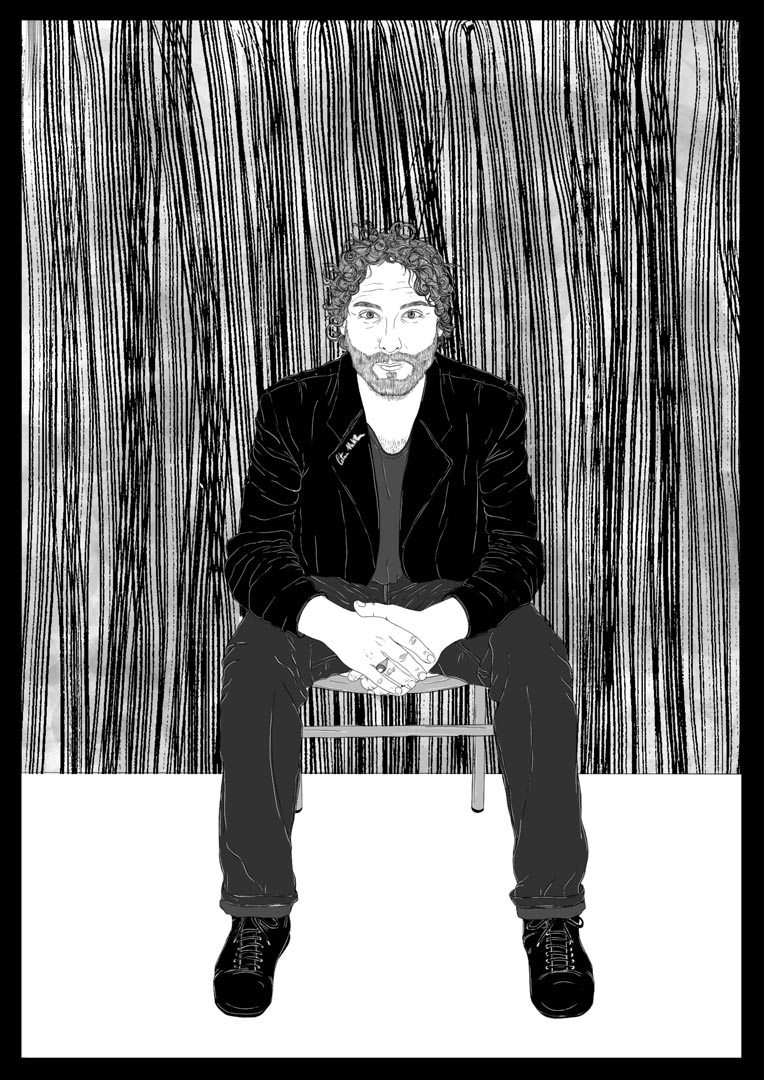
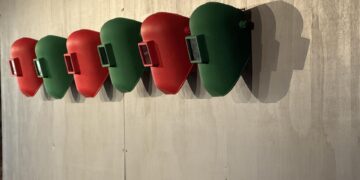
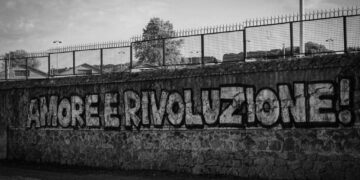
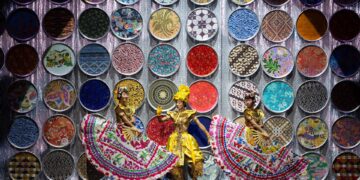
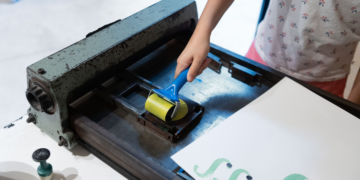
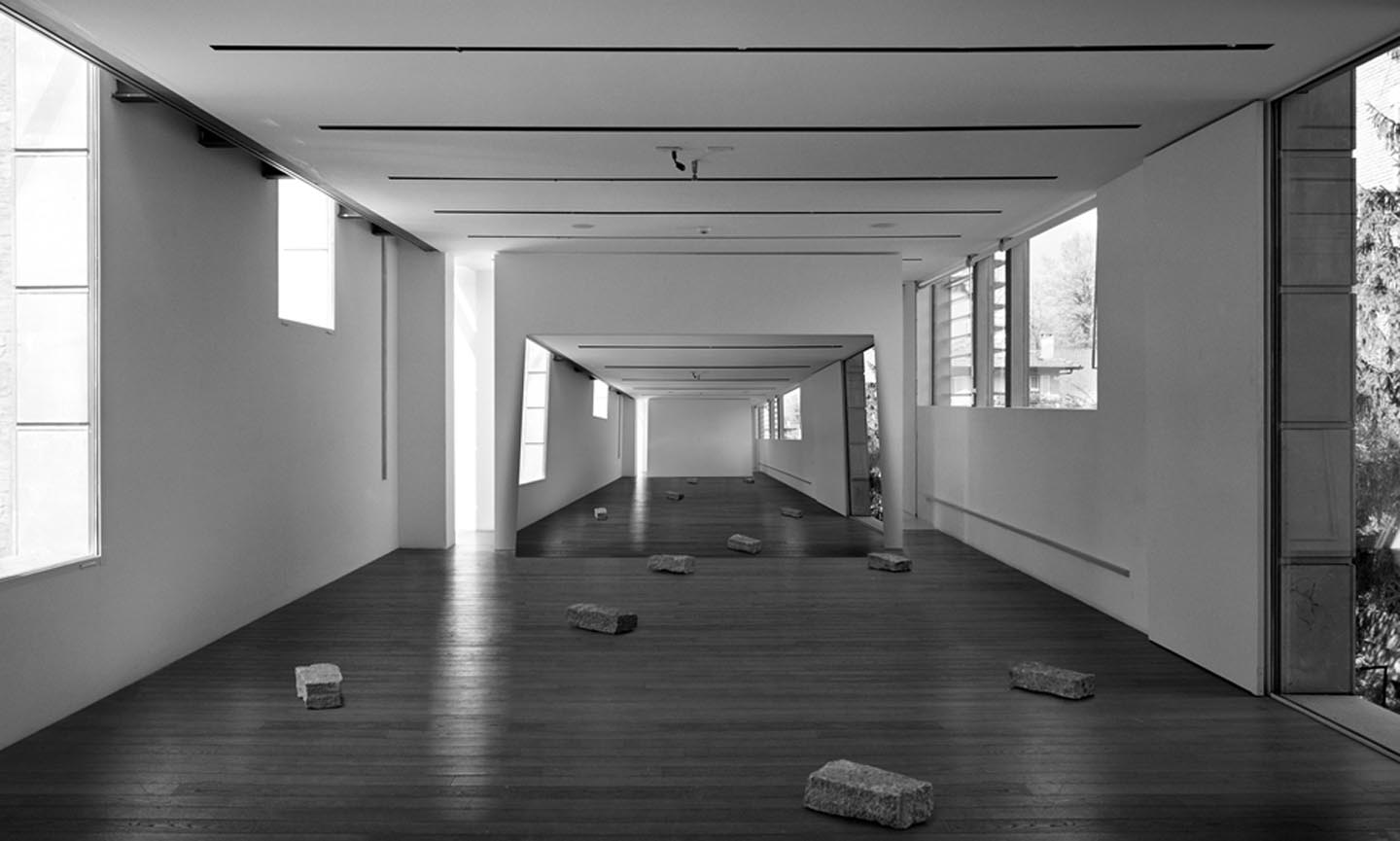
images (cover – 1) Giuseppe Pietroniro, Illustrazione di Nikla Cetra (2) Interno Spazio Gerra,2009,ReggioEmilia, 150x 250 cm, foto Archivio Pietroniro (3) È come se nulla fosse.. MACRO Roma, 2015. Installazione Ambiente, Foto Giorgio Benni, Courtesy Archivio Pietroniro (4) IN_Stability, 2021, Acciaio Spechiante, Dimensione Ambiente, Courtesy Archivio Pietroniro (5) Installazione Ambiente, 2023. 300 x 1000 cm.Museo Michetti Francavilla (CH) Foto Roberto Apa, Courtesy Archivio Pietroniro (6) Modulopinto,190 x 190 cm Foto Roberto Apa, Courtesy Archivio Pietroniro
“Survive the Art Cube” is a series of interviews with artists from different generations. The title borrows from Brian O’Doherty’s most famous book to echo its critical slant. It aims to better understand how these artists perceive the analogue-digital space in which we are immersed and our contemporaneity, what sense and importance artistic space has today and what sense it makes in our present to make an artistic journey. Dark times call for reflection on reality and only artists, perhaps, can open our minds.
Previous Interviews:
Interview to Francesca Cornacchini, Arshake, 14.11.2023
Interview to Enrico Pulsoni, Arshake, 09.11.2023
Interview to Marinella Bettineschi, Arshake, 15.10.2023