
Your browser does not support the video tag.
Marco Cadioli - The Whirlpool
  • © ARSHAKE | ISSN 2283-3676
  • CONTACT
  • Login
Arshake
  • ABOUT US
    • ABOUT US
    • PROJECT
    • MEDIA/PARTNERSHIPS
    • CONTACT US
  • FOCUS
    • All
    • Focus
    • From the Past
    • Interview
    Call for submissions> Residency in Genoa

    Call for submissions> Residency in Genoa

    Marco Emmanuele. The Unknown Glimmer Enosigèo

    Marco Emmanuele. The Unknown Glimmer Enosigèo

    A Body Engineered by Water – In Dialogue with Claudia Amatruda 

    A Body Engineered by Water – In Dialogue with Claudia Amatruda 

    Daniele Puppi. Ehi Lampu in Rome

    Daniele Puppi. Ehi Lampu in Rome

    Interview | C.I.R.C.E.

    In dialogue with Abe Pazos Solatie

    Interview | C.I.R.C.E.

    Interview | C.I.R.C.E.

    Fabrizio Cicero. This is not a light

    Fabrizio Cicero. This is not a light

    Legami by Luigi Pagliarini now at ISIA Pescara

    Legami by Luigi Pagliarini now at ISIA Pescara

    Lynn Hershman Leeson. A lecture at the Whitney Museum of American Art

    Lynn Hershman Leeson. A lecture at the Whitney Museum of American Art

  • FRAME
    FRAME > The Fall of Icarus

    FRAME > The Fall of Icarus

    FRAME > Resonant

    FRAME > Resonant

    FRAME > City

    FRAME > City

    FRAME > Magnetism

    FRAME > Magnetism

    FRAME > You Are Here

    FRAME > You Are Here

    FRAME > Gdansk

    FRAME > Gdansk

    FRAME > Cicadas

    FRAME > Cicadas

    FRAME > Dalunsch

    FRAME > Dalunsch

    FRAME > Siren

    FRAME > Siren

  • VIDEO POST
    VIDEO POST > Scribble

    VIDEO POST > Scribble

    VIDEO POST > The Prayer

    VIDEO POST > The Prayer

    VIDEO POST > Organism

    VIDEO POST > Organism

    VIDEO POST > Chiroptera

    VIDEO POST > Chiroptera

    VIDEO POST > Pluvial

    VIDEO POST > Pluvial

    VIDEO POST > PAPERS

    VIDEO POST > PAPERS

    VIDEO POST > Stranger Visions

    VIDEO POST > Stranger Visions

    VIDEO POST > Buoyant Choreographies

    VIDEO POST > Buoyant Choreographies

    VIDEO POST > Composition for Objective Sound No.7

    VIDEO POST > Composition for Objective Sound No.7

  • SPECIAL PROJECT
    • ARSHAKE’S BANNER
    • CRITICAL GROUNDS
    • YOUNG ITALIAN ARTISTS
    • GAME OVER
    • GAME OVER • Loading
    • EXTERNAL PROJECTS
      • BACKSTAGE | ONSTAGE
      • PERCORSI • 6 years of the Terna Prize
      • TEMPO IMPERFETTO
  • RESOURCES
    • ARCHIVE
    • CALLS
    • ONLINE RESOUCES
  • it IT
  • en English
No Result
View All Result
Arshake
  • ABOUT US
    • ABOUT US
    • PROJECT
    • MEDIA/PARTNERSHIPS
    • CONTACT US
  • FOCUS
    • All
    • Focus
    • From the Past
    • Interview
    Call for submissions> Residency in Genoa

    Call for submissions> Residency in Genoa

    Marco Emmanuele. The Unknown Glimmer Enosigèo

    Marco Emmanuele. The Unknown Glimmer Enosigèo

    A Body Engineered by Water – In Dialogue with Claudia Amatruda 

    A Body Engineered by Water – In Dialogue with Claudia Amatruda 

    Daniele Puppi. Ehi Lampu in Rome

    Daniele Puppi. Ehi Lampu in Rome

    Interview | C.I.R.C.E.

    In dialogue with Abe Pazos Solatie

    Interview | C.I.R.C.E.

    Interview | C.I.R.C.E.

    Fabrizio Cicero. This is not a light

    Fabrizio Cicero. This is not a light

    Legami by Luigi Pagliarini now at ISIA Pescara

    Legami by Luigi Pagliarini now at ISIA Pescara

    Lynn Hershman Leeson. A lecture at the Whitney Museum of American Art

    Lynn Hershman Leeson. A lecture at the Whitney Museum of American Art

  • FRAME
    FRAME > The Fall of Icarus

    FRAME > The Fall of Icarus

    FRAME > Resonant

    FRAME > Resonant

    FRAME > City

    FRAME > City

    FRAME > Magnetism

    FRAME > Magnetism

    FRAME > You Are Here

    FRAME > You Are Here

    FRAME > Gdansk

    FRAME > Gdansk

    FRAME > Cicadas

    FRAME > Cicadas

    FRAME > Dalunsch

    FRAME > Dalunsch

    FRAME > Siren

    FRAME > Siren

  • VIDEO POST
    VIDEO POST > Scribble

    VIDEO POST > Scribble

    VIDEO POST > The Prayer

    VIDEO POST > The Prayer

    VIDEO POST > Organism

    VIDEO POST > Organism

    VIDEO POST > Chiroptera

    VIDEO POST > Chiroptera

    VIDEO POST > Pluvial

    VIDEO POST > Pluvial

    VIDEO POST > PAPERS

    VIDEO POST > PAPERS

    VIDEO POST > Stranger Visions

    VIDEO POST > Stranger Visions

    VIDEO POST > Buoyant Choreographies

    VIDEO POST > Buoyant Choreographies

    VIDEO POST > Composition for Objective Sound No.7

    VIDEO POST > Composition for Objective Sound No.7

  • SPECIAL PROJECT
    • ARSHAKE’S BANNER
    • CRITICAL GROUNDS
    • YOUNG ITALIAN ARTISTS
    • GAME OVER
    • GAME OVER • Loading
    • EXTERNAL PROJECTS
      • BACKSTAGE | ONSTAGE
      • PERCORSI • 6 years of the Terna Prize
      • TEMPO IMPERFETTO
  • RESOURCES
    • ARCHIVE
    • CALLS
    • ONLINE RESOUCES
No Result
View All Result
Arshake
No Result
View All Result
Home News Focus

Interview | Luca Zaffarano

Elena Giulia Rossi by Elena Giulia Rossi
13/06/2016
in Focus, Interview
Intervista | Luca Zaffarano
Tomorrow Arshake will relaunch an interview by Luca Zaffarano of the multi-faceted artist Bruno Munari dating back to 1987, the year after his first retrospective as an artist in Italy realized at Palazzo Reale in Milan. Today Luca Zaffarano is one of the best-qualified people to speak of Bruno Munari’s art. Over the years he has built up the munart.org website/archive, containing in-depth information on the life and oeuvre of the artist, constant updates on all presentations of his work, interesting facts, documents, information regarding collectors of his pieces and much more. Over time the archive has become a reference point for researchers, enthusiasts and experts. I met Luca Zaffarano in 2013 when I came across the site while looking for information and material for an article on Bruno Munari. At that time Zaffarano was working with the photographer Pierangelo Parimbelli on a study of Munari’s Macchine Inutili (Useless Machines), which became an essay in text and images published on Arshake in five instalments over the course of 2014 (Bruno Munari and the Useless Machines) and in concomitance of one large retrospective, Munari Politecnico, depicted at Museo del Novecento in Milan. A while back I stumbled upon a 1987 interview of Munari by Luca Zaffarano. I was immediately struck by the desire to relaunch it (in Italian and English), in order to echo the thinking of a visionary artist who is today more current than ever. I contacted him only recently, and once again my request comes at a timely moment: one of Bruno Munari’s Macchine Inutili and some of the series Forchette Parlanti, has just been acquired by the Centre Pompidou in Paris. I asked Luca Zaffarano a few questions to re-set the context of the interview, but also to frame  his role and that of the archive in following the work and the fortune of Bruno Munari, shaping one of largest archive hosted in a corner of cyberspace, available to all.
Munari_2_

You met Bruno Munari in 1987.  At what stage in your research did this meeting take place? And who was Bruno Munari for the public and the art world at that point?

I met him when I was a student. At that time I was extremely interested in electronic music (I graduated in computer science several years later in Milan, with the current head of faculty, Goffredo Haus, who was then leading the digital music laboratory). For me, Munari was an interesting figure because of his ability to be interdisciplinary, and I was amazed by the fact that he had associated with people like Luciano Berio, Bruno Maderna and John Cage at the legendary RAI Studio of Phonology in Milan. He broke down colours with polarisations, while they dismantled musical tones with concrete music, synthesised sound or prepared piano; all were revolutionising the language. I really liked his books: apparently simple, but in fact very theoretical. With an Anglo-Saxon talent for explanation he explained in detail how he went about his work and the results he obtained. He had an “open-source” approach ahead of his time. He was an artist who used a scientific method, enriched by imagination, but always verifiable. His research was closely linked to the work of the European avant-garde in the 1920s and 30s, which he then further developed in a kind of long-distance dialogue.

How well-known was Munari to the public and critics in Italy and abroad at that time? And how well-known is he today outside Italy?

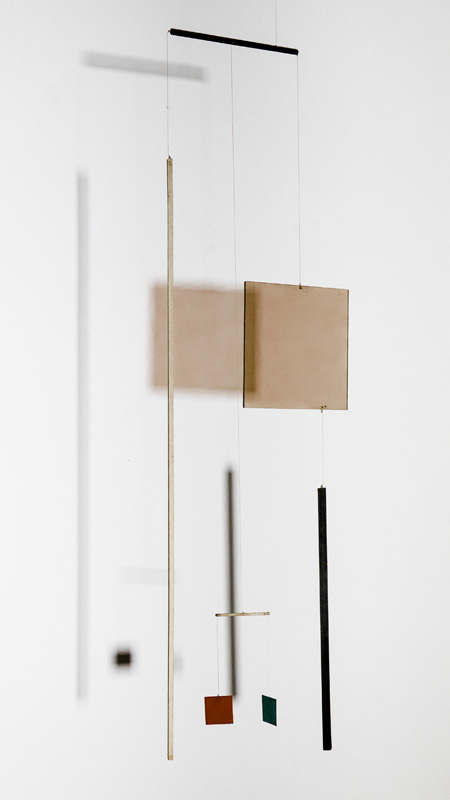
In Italy, Munari was never considered an artist, in my view, until his anthology exhibition in 1986 at Milan’s Palazzo Reale (when he was almost 80). This show was keenly desired by Enrico Baj, who found it shameful that the city of Milan had not yet dedicated a homage to such a major figure as his colleague. Further proof is that today, despite the efforts made by former director Marina Pugliese, the Museo del Novecento in Milan does not possess a Macchina Inutile by Munari.  Overseas, however, there has always been a fair amount of attention paid to his work. I recently contacted a buyer at the Pompidou Centre about the possibility of acquiring a 1949 Macchina Inutile (it hung for many years in the artist’s kitchen, and was beautifully photographed by our own excellent Ada Ardessi). I emailed the curator at New Year, when she was on holiday; a few days later she had spoken to the director and by 7th February they had already put in place the procedure for the acquisition. The process has just concluded, following clearance by the Ministry of Fine Arts. This is the second Macchina Inutile to become part of a foreign museum collection; the first, in 1952, was donated by Pontus Hulten (a great admirer of Munari) to the Moderna Museet in Stockholm. A process so quick and simple that it would be unthinkable in Italy, and I haven’t even gone down that route, for lack of trust. It’s a pity, I believe that in nineteenth-century Italian art, Munari’s importance is comparable only to Marinetti; he’s our Warhol before Warhol came along, as  American curator Vivien Greene put it.
Munari-UselessMachine-parimbelli

You’ve been occupied by Bruno Munari for many years. Your archive is now an extremely important reference point for knowledge and circulation of Munari’s work. Can you tell us how you manage his work and his memory, as well as building an archive which you generously make available online?

The archive owes a lot to the philosophy of knowledge sharing and to certain major web-based projects (minimal in appearance yet dense in content) such as ubu.com e monoskop.org. The idea is this: the world of art is opaque, and opacity serves to confuse, to sustain actions which are halfway between indirect finance and insider trading. You may not like it, but the art world today operates in this way. Putting all the documentation about what Munari really achieved online allows people to understand whether he was really an important figure in twentieth century Italian art and on the international scene, and why. The sharing of knowledge serves to make public what has already been done, so that those who come after can start from these results and continue to new things, however minimal.
cover-2

What are your aims for the future of the archive?

First of all, continue to work on the munart.org project, which has now become a kind of hub, a dispenser of free services: curators write (even important ones, such as Biennale directors) to find out where to find a work that’s on loan, scholars looking for documentary confirmation, magazines looking to publish images, etc.

Another extremely interesting project would be to hold the retrospective that no one has yet held, we could call it the Munari exhibition that I personally – and I think many people – would like to see, obviously starting in Italy; but the Italian art world is still very pre-modern, what you can do doesn’t count, only who you are or who your sponsor is.


 Munart.org

 
images
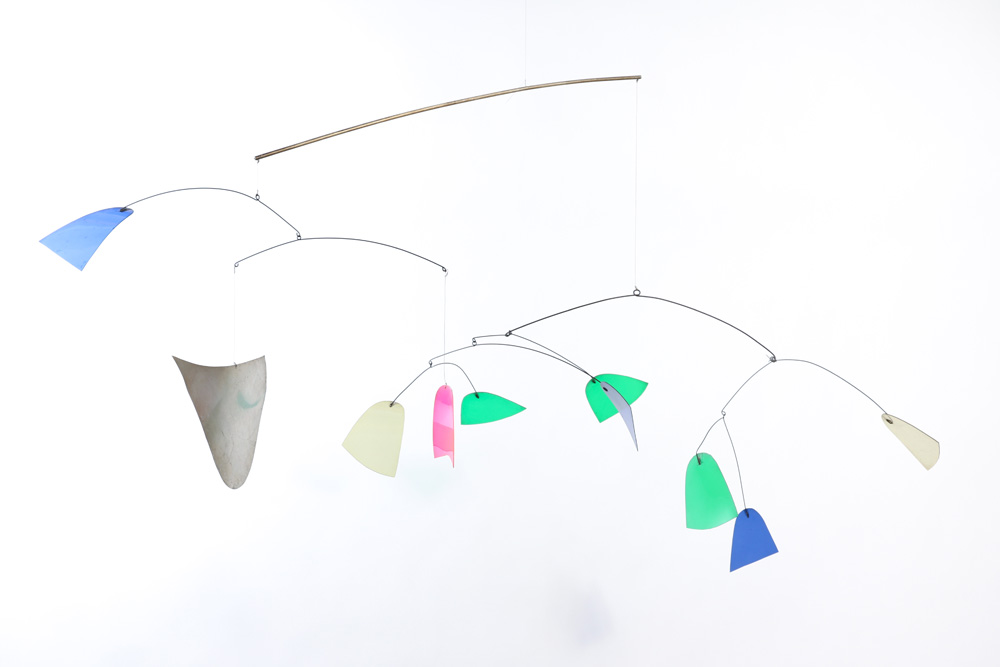
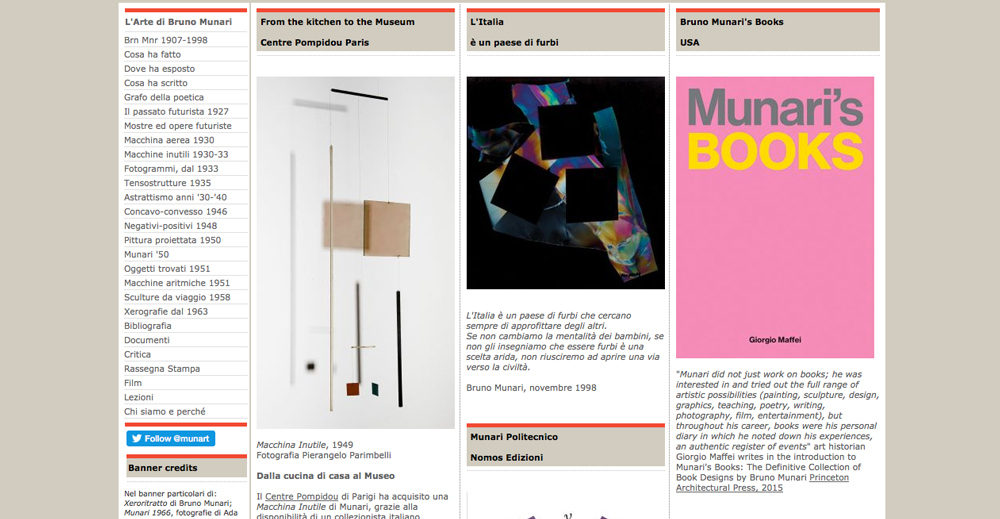
(cover 1-4) munart.com, snap shot from website (2) Bruno Munari, «Macchina Inutile. Omaggio a Calder», 1949 circa. nylon, wire, celluloid and aluminium  forms private collection, Reggio Emilia, Italy (3) Munari, «Macchina Inutile», 1949, Metal, perspex, wooden rods, nylon, Centre Pompidou, Paris, photograph by Pierangelo Parimbelli (2016)
 
 
ShareTweetShareSend
Previous Post

FRAME > Floating Garden

Next Post

1987. Interview to Bruno Munari

Elena Giulia Rossi

Elena Giulia Rossi

Related Posts

Call for submissions> Residency in Genoa
Calls

Call for submissions> Residency in Genoa

by Arshake
08/04/2026
Marco Emmanuele. The Unknown Glimmer Enosigèo
exhibitions

Marco Emmanuele. The Unknown Glimmer Enosigèo

by Laura Catini
31/03/2026

CALLS

Call for submissions> Residency in Genoa
Calls

Call for submissions> Residency in Genoa

08/04/2026
Bill Fontana in San Peter’s Basilica
Calls

MA in History and Critical Thinking (HCT)

11/11/2025
Open call: Agora, a Gathering of Art and Philosophy
Calls

Open call: Agora, a Gathering of Art and Philosophy

28/10/2025
Dialogues across the Seas 2018-2025
Calls

Dialogues across the Seas 2018-2025

05/09/2025
https://www.arshake.com/special-project-banner/young-italian-artists/
Facebook Twitter Instagram

Arshake is a collaborative artistic project, blurring the borders between art, science and technology, information and production.

  • Focus
  • Video post
  • Frame
  • Special Project
  • Interview
  • Calls
  • Exhibitions

One more step - Check your email and click the confirmation link

© 2024 – ARSHAKE

Welcome Back!

Login to your account below

Forgotten Password?

Retrieve your password

Please enter your username or email address to reset your password.

Log In
Gestisci Consenso Cookie
Per fornire le migliori esperienze, utilizziamo tecnologie come i cookie per memorizzare e/o accedere alle informazioni del dispositivo. Il consenso a queste tecnologie ci permetterà di elaborare dati come il comportamento di navigazione o ID unici su questo sito. Non acconsentire o ritirare il consenso può influire negativamente su alcune caratteristiche e funzioni.
Funzionale Always active
L'archiviazione tecnica o l'accesso sono strettamente necessari al fine legittimo di consentire l'uso di un servizio specifico esplicitamente richiesto dall'abbonato o dall'utente, o al solo scopo di effettuare la trasmissione di una comunicazione su una rete di comunicazione elettronica.
Preferenze
L'archiviazione tecnica o l'accesso sono necessari per lo scopo legittimo di memorizzare le preferenze che non sono richieste dall'abbonato o dall'utente.
Statistiche
L'archiviazione tecnica o l'accesso che viene utilizzato esclusivamente per scopi statistici. L'archiviazione tecnica o l'accesso che viene utilizzato esclusivamente per scopi statistici anonimi. Senza un mandato di comparizione, una conformità volontaria da parte del vostro Fornitore di Servizi Internet, o ulteriori registrazioni da parte di terzi, le informazioni memorizzate o recuperate per questo scopo da sole non possono di solito essere utilizzate per l'identificazione.
Marketing
L'archiviazione tecnica o l'accesso sono necessari per creare profili di utenti per inviare pubblicità, o per tracciare l'utente su un sito web o su diversi siti web per scopi di marketing simili.
  • Manage options
  • Manage services
  • Manage {vendor_count} vendors
  • Read more about these purposes
Visualizza le preferenze
  • {title}
  • {title}
  • {title}
No Result
View All Result
  • ABOUT US
    • ABOUT US
    • PROJECT
    • MEDIA/PARTNERSHIPS
    • CONTACT US
  • FOCUS
  • FRAME
  • VIDEO POST
  • SPECIAL PROJECT
    • ARSHAKE’S BANNER
    • CRITICAL GROUNDS
    • YOUNG ITALIAN ARTISTS
    • GAME OVER
    • GAME OVER • Loading
    • EXTERNAL PROJECTS
      • BACKSTAGE | ONSTAGE
      • PERCORSI • 6 years of the Terna Prize
      • TEMPO IMPERFETTO
  • RESOURCES
    • ARCHIVE
    • CALLS
    • ONLINE RESOUCES

© 2024 – ARSHAKE

This website uses cookies. By continuing to use this website you are giving consent to cookies being used. Visit our Privacy and Cookie Policy.